


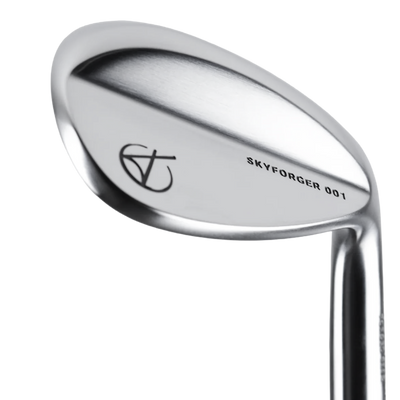


Yes, a driver and a 1 wood are the same club. The names just come from two different eras of golf history, not two different pieces of gear. So if you're wondering; “is a driver a 1 wood?” The short answer is yes, with one real exception: some manufacturers use "1 wood" to describe a compact driving wood rather than a full-size 460cc driver, and that distinction can actually affect which type of club you end up buying.
Is a Driver a 1 Wood? Here's What That Actually Means
A driver is a 1 wood. The "1 wood" label comes from golf's traditional club numbering system, where woods were ranked by loft: lower number, lower loft, more potential distance. The driver sits at number one because it carries the least loft of any wood in the bag.
Think of it like a car's first gear: same function, different name depending on the era. Is a 1 wood a driver? Yes. Is a driver the same as a 1 wood? Completely. "1 wood" is the older, more formal term. "Driver" is what golfers have called it for decades. Same club, two names, different generations.
From Persimmon to Titanium: How the 1 Wood Became the Modern Driver
The 1 wood started as a hand-carved persimmon or hickory club, dense and heavy, built for an era when feel meant wood grain under your hands. Through the mid-1900s, laminated wood heads offered modest improvements, but the club was still genuinely made of wood.
That changed through the 1980s and 1990s, when hollow steel and then titanium heads took over. Calling it a "wood" stopped making much sense once it wasn't made of wood anymore, and "driver" became the everyday term as the material changed.
The numbering system also covered 2, 3, 4, and 5 woods, most of which have since been replaced by hybrids in the average golfer's bag. Modern drivers top out at 460cc, the maximum clubhead volume allowed under the Rules of Golf, with adjustable hosels and aerodynamic shaping the original persimmon 1 wood never imagined. At this point, the difference between "1 wood" and "driver" is mostly vocabulary.
Is a 1 Wood the Same as a Driver in Performance Terms?
In most cases, yes, they're functionally identical. But there's one real-world exception worth understanding.
Some manufacturers use "1 wood" to describe a compact driving wood: a smaller head than a full 460cc driver, with more loft. These clubs sit between a 3 wood and a standard driver in size and forgiveness. Is a 1 wood the same as a driver in these cases? Not quite. The distinction is about head size and playability, not any fundamental design difference.
A driving wood can be easier to hit for mid-to-high handicappers because the compact shape interacts differently with turf and some golfers find it easier to control. The IGNIS D2 Driver, for comparison, is built as a full 460cc head rather than a compact driving wood: a titanium body with a carbon fiber crown, engineered for more than 10% higher moment of inertia than its predecessor so the clubhead resists twisting on off-center strikes. The 1 wood versus driving wood choice, when it exists, comes down to what your game actually needs.
When to Use a Driver vs. a Driving Wood (and How to Choose)

The practical question isn't what to call the club. It's which one to pull from the bag.
Pull the full driver when:
- You're on a wide-open tee box with room to work
- Maximum distance is the priority
- Your swing speed is consistent and you're confident off the tee
Reach for a compact driving wood when:
- The fairway is tight and accuracy matters more than distance
- You struggle with the forgiveness of a full-size driver
- Your swing speed is moderate and extra loft helps you get the ball airborne
Here's the part that surprises a lot of golfers: the accuracy gap between a driver and a 3-wood is a lot smaller than it feels on the course. Golf Monthly's breakdown of Arccos tee-shot data found golfers find only about 2.4% more fairways with a 3-wood than with a driver on average, and at some handicap levels the driver actually finds more fairways. In other words, the "safe" club off the tee isn't as safe as it's made out to be, so distance shouldn't automatically lose to caution on tight tees.
When choosing, weigh how wide the fairway is, how much distance you actually need, your confidence level that day, and the turf and wind conditions in front of you. If you're not sure where you land, a fitting session is the fastest way to find out, not another YouTube video.
Ready to Find Your Perfect Driver? Explore the IGNIS D2
Now you know the answer: a driver is a 1 wood, the names evolved from different eras, and the only time the distinction carries real weight is when a manufacturer uses "1 wood" to describe a compact driving wood rather than a full 460cc head. For most golfers, the terminology question has a simple answer, but the equipment question is worth taking seriously.
If it isn't working, the issue usually isn't the name on the club. It's the fit. Loft, shaft weight, flex, and head size all affect how a driver performs for your specific swing and angle of attack, and clubs don't fix swings on their own. Lessons and practice do that. The right clubs just make it easier to see the progress.
The IGNIS D2 from is a 460cc titanium and carbon fiber driver built around forgiveness: mass repositioned toward the toe, heel, and rear of the head for more than 10% higher MOI than its predecessor, plus an eight-setting adjustable hosel so you can dial in loft and lie. It's priced at $329 USD, well under what the big brands charge for a comparable spec. Explore the IGNIS D2 Driver on takomogolf.com, or run the free fitting tool to see what setup actually fits your swing.
FAQs About Drivers and 1 Woods
Is a driver the same as a 1 wood?
Yes. "1 wood" is the traditional numbering-system name; "driver" is the modern term. Both refer to the lowest-lofted wood in the bag, built for distance off the tee.
Why do some people call it a 1 wood instead of a driver?
The term comes from when club heads were made of persimmon wood. As materials shifted to steel and titanium, "driver" became the common name. Plenty of golfers still say "1 wood" out of habit, and they're not wrong to.
What is the difference between a 1 wood and a modern driver?
Usually nothing, they're the same club. Some manufacturers use "1 wood" to describe a compact driving wood with a smaller head than a full driver, offering a middle ground between a 3 wood and a standard driver.
Can a beginner use a 1 wood or driver?
Beginners can use either, though a compact driving wood is often the easier starting point. The smaller head and extra loft make off-center hits more forgiving and help get the ball airborne more consistently.
What number wood is a driver?
A driver is a 1 wood, the lowest number in the wood classification system, meaning the lowest loft. Lower number means less loft and more potential distance, which is why the driver is the club for long par-4s and par-5s.


