




Golf has five main club categories; woods, irons, hybrids, wedges, and putters. Each category is engineered for a specific distance range and situation. Understanding which category to use, and when, is the foundation of playing smarter golf. This guide breaks down golf clubs categories, explains how to build your bag, and helps you avoid the costly mistakes most beginners make.
Why Understanding Golf Club Categories Changes How You Play
As Adam Bazalgette of Scratch Golf Academy puts it: "Understanding the different types of golf clubs and their uses is essential for improving your game performance." That's not a throwaway line, it's the difference between scrambling and strategizing on every hole.
Golf clubs categories aren't arbitrary. Five categories. Fourteen slots. Every one of them matters. Add in the USGA's 14-club limit, and every slot in your bag becomes a decision. According to the USGA, golf participation has surged more than 50 percent in less than a decade, from about 30 million players to more than 45 million, meaning millions of new golfers need to understand golf clubs explained from the ground up. By the end, you'll know exactly what to carry, why, and what the industry doesn't want you to overthink.
The 5 Main Golf Clubs Categories: A Quick Overview
Golf club types are best understood as a distance ladder, from maximum distance down to precision putting. Here's your reference map for the full set of golf clubs names, distances, and purposes:
|
Club Category |
Example Clubs |
Typical Loft |
Typical Distance |
|
Woods |
Driver, 3-wood, 5-wood |
8–18° |
200–280+ yards |
|
Irons |
4-iron through 9-iron |
20–42° |
120–200 yards |
|
Hybrids |
3H, 4H, 5H |
19–28° |
170–210 yards |
|
Wedges |
PW, GW, SW, LW |
43–64° |
60–125 yards |
|
Putter |
Blade, Mallet |
2–4° |
Green use only |
No single club does everything well, that's the whole point of the category system.
Woods: Distance Clubs Built for the Tee and Fairway
Woods are the big-distance clubs. They’re known for their large hollow heads, long graphite shafts, and low loft angles that are designed to launch the ball as far as possible. The name is a holdover from when these heads were literally made of wood; today they're titanium or composite.
The driver (1-wood) carries the lowest loft, typically 8–12 degrees, and a clubhead up to 460cc, the maximum allowed by USGA rules. It's used exclusively off the tee on par-4s and par-5s and is one of the hardest clubs to control. Knowing when to use each golf club in this category starts with understanding that the driver is a specialist, not a default.
Fairway woods follow a simple rule: higher number, more loft, shorter distance. The 3-wood (~15°), 5-wood (~18°), and 7-wood (~21°) cover a range from tee accuracy to long approach play, each progressively easier to launch. Graphite shafts are the standard for good reason: lighter means faster, faster means farther. Understanding golf clubs names and uses in this category starts with the loft-to-distance relationship.
Driver vs. Fairway Woods: Which Should Beginners Prioritize?
Modern drivers are more forgiving than ever, but forgiving doesn't mean easy. It's still the longest, lowest-lofted club in the bag and it only works off the tee. Fairway woods work from the tee, the fairway, and even light rough. More loft, easier launch, friendlier learning curve. For most beginners, a 3-wood or 5-wood off the tee will get you further down the fairway than a driver hit sideways into the trees.
Irons: The Workhorses of Your Golf Bag

Irons are the clubs you'll reach for most often, primarily for approach shots from the fairway or rough toward the green. Understanding when to use each golf club in the iron category comes down to the numbering system: higher number equals higher loft, shorter distance, more accuracy and height.
Approximate benchmarks: 4-iron (~24°, ~180 yards), 5-iron (~26°, ~170 yards), 7-iron (~34°, ~150 yards), 9-iron (~42°, ~125 yards). The category breaks into three groups: long irons (4,5) are the hardest to hit because low loft makes getting the ball airborne genuinely difficult; mid irons (6,7) are more forgiving and heavily used; short irons (8,9, PW) are reliable and excellent inside 160 yards.
One feature worth knowing when figuring out how to choose golf clubs: offset hosels. An offset hosel positions the clubface slightly behind the shaft, giving the hands extra time to square the face at impact, a meaningful help for golfers who slice. It's built into most game-improvement irons and widely overlooked in buying decisions.
Not sure which iron setup fits your game? Takomo's iron fitting tool walks you through it in a few minutes.
Blade vs. Cavity Back Irons: Which Type Is Right for You?
Cavity backs are built for the rest of us; more forgiveness, bigger sweet spot, fewer punishing misses. Blades concentrate mass behind the center of the face for better feedback and shot-shaping control, which is why low handicappers and tour pros gravitate toward them. Modern muscle backs have closed the gap and can be surprisingly forgiving in the right hands.
A practical taxonomy for shoppers: Super Game Improvement irons offer maximum forgiveness, Game Improvement irons balance forgiveness and feel, and Players irons prioritize control over everything else. Intermediate golfers should stay in the Game Improvement tier until ball striking becomes genuinely consistent.
Hybrids: An Alternative to Long Irons
Hybrids were introduced to make longer approach shots more manageable, particularly for golfers who struggle with traditional long irons. While long irons (like the 3-iron and 4-iron) offer precision and control, they can be difficult to strike consistently due to their lower loft and smaller clubface.
A hybrid blends characteristics of both irons and fairway woods. It typically has a wider sole and a lower center of gravity, which can help launch the ball higher and provide more forgiveness on off-center hits. For some golfers, this makes longer shots easier to execute, especially from rough or uneven lies.
That said, hybrids are not a one-size-fits-all solution. Many golfers still prefer long irons for their workability, consistency, and control, especially in windy conditions or on firm courses. The right choice ultimately depends on your skill level, playing style, and personal preference.
Wedges: Short-Game Specialists That Save You Strokes

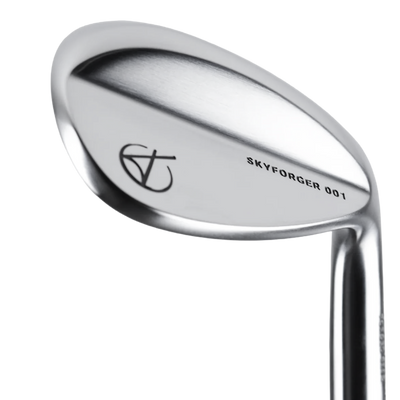
Wedges are where rounds are won and lost and most golfers don't carry enough of them. Wedge clubs are a specialized subcategory of irons with higher loft angles, built for precision at short distances. Knowing when to use each golf club in this category is what separates scrambling golfers from confident short-game players.
-
Pitching Wedge (PW) — 43–48°: The longest-distance wedge, covering 100–125 yards. Usually included in iron sets and your go-to for full approach shots inside 125 yards.
-
Gap Wedge (GW) — 50–54°: Fills the yardage gap between the PW and sand wedge. Covers roughly 90–100 yards. Skipping this club leaves a hole in your short game.
-
Sand Wedge (SW) — 54–58°: Built with a wider bounce sole that glides through sand instead of digging. Equally useful from thick rough.
-
Lob Wedge (LW) — 58–64°: The highest loft of any club. Used for high, soft shots over obstacles or from tight lies near the green, typically 60–80 yards.
Bounce is worth understanding: higher bounce (12–14°) suits soft sand and fluffy rough; lower bounce (4–6°) suits firm turf and tight lies. Most golfers should carry 2–3 wedges. Beginners should start with a PW and SW, then add a gap wedge once they recognize the yardage problem it solves.
Putters: The Most-Used Club in Your Bag
Putters account for somewhere between 35–45 percent of your total strokes in a typical round, which makes choosing the right one matter more than most golfers realize. Golf clubs explained for beginners often gloss over putters. That's a mistake.
Blade putters have a traditional, narrow head design with excellent feel and feedback, suiting players with a straight-back, straight-through stroke. Mallet putters have a larger head with weight distributed around the perimeter, increasing forgiveness on off-center hits and typically featuring built-in alignment aids. Mallets suit arc strokes and are generally more forgiving for beginners.
Standard putter shaft lengths run 32–36 inches. Belly and long putters exist but are far less common since the USGA banned anchoring. How to choose golf clubs in this category comes down to stroke type, green reading style, and eye dominance. Get your game fitted if possible, the right putter is more personal than any other club in the bag.
Building Your 14-Club Bag: Sample Configurations by Skill Level
What golf clubs do I need? The honest answer: it depends on your skill level, not on what a tour pro carries.
Start with the rule: the USGA limits golfers to 14 clubs per round. Carry more and you face a 2-stroke penalty per hole, up to a maximum of 4 strokes. Here are three smart configurations:
-
Beginner Bag (7–9 clubs): Driver or 3-wood, 5-hybrid, 7-hybrid, 7-iron, 9-iron, Pitching Wedge, Sand Wedge, Putter. Rationale: maximum forgiveness, no hard-to-hit long irons, full distance coverage. Most beginners genuinely don't need more.
-
Intermediate Bag (12–14 clubs): Driver, 3-wood or 5-wood, 4-hybrid, 5-iron through 9-iron, Pitching Wedge, Gap Wedge, Sand Wedge, Putter. Rationale: full iron set from 5-iron down where consistency is achievable, a hybrid replacing the 4-iron, and a three-wedge setup eliminating distance gaps.
-
Advanced/Low-Handicap Bag (14 clubs): Driver, 3-wood, 2-hybrid or 5-wood, 4-iron through PW, Pitching Wedge, Gap Wedge, Sand Wedge, Lob Wedge, Putter. Rationale: full shot-shaping control across every category, four wedge options for precise short-game management.
How to choose golf clubs for your bag isn't about filling all 14 slots, it's about covering your weaknesses. Build around what your game actually needs.
Common Beginner Mistakes When Choosing Golf Club Categories
 Golf clubs for beginners are marketed aggressively, but almost no one warns new golfers about the mistakes that waste money and stall improvement. Here are some mistakes to avoid:
Reaching for the driver every time
The driver is one of the hardest clubs to hit consistently. Using it on every tee box when accuracy matters is a reliable way to lose balls and stroke count. A 3-wood or hybrid often produces better results, and knowing when to use each golf club off the tee is one of the fastest ways to lower your score.
Skipping the gap wedge
Jumping from a 48° pitching wedge to a 56° sand wedge leaves a yardage gap that forces awkward half-swings. A gap wedge at 50–52° is one of the highest-value purchases in golf and one of the most overlooked.
Underinvesting in the putter
The putter gets used on every hole, so it's worth taking seriously, but expensive doesn't mean better. Putting is deeply feel-dependent, and the right putter is the one that feels right in your hands. Try both blade and mallet styles, roll a few putts, and go with what you trust.
As Adam Bazalgette's teaching philosophy makes clear, knowing your tools is inseparable from improving your game. Fix these four mistakes before spending another dollar on clubs. Your game will thank you.
Final Thoughts on Golf Club Categories
Understanding golf club categories is the first real step toward making smarter decisions, both on the course and when choosing what goes in your bag. There may be five categories and up to 14 clubs, but the goal isn’t to carry everything. It’s to build a setup that delivers consistent performance where it matters most.
And for most golfers, that starts with irons. They’re the clubs you rely on for the majority of your shots, the ones that demand precision, consistency, and trust.
If you’re looking for irons that deliver premium performance without the inflated price tag, it’s worth taking a closer look at Takomo’s iron sets. Clean design and serious quality, these clubs were built to perform. Because at the end of the day, better golf doesn’t come from more clubs. It comes from the right ones.
FAQs About Golf Club Categories
What are the main golf club categories?
The five main categories are woods, irons, hybrids, wedges, and putters. Woods are built for distance, irons for approach shots, wedges for short-game control, and putters for rolling the ball on the green. Some golfers also include hybrids as a separate category, though they’re essentially a blend of woods and irons.
How many clubs are allowed in a golf bag?
According to the rules set by the United States Golf Association, golfers can carry a maximum of 14 clubs in their bag during a round. This typically includes a mix of woods, irons, wedges, and a putter.
Which golf clubs should beginners use?
Beginners should focus on a simple, forgiving set. This usually means a driver or fairway wood, a few mid-to-high irons (like 6–9), a wedge, and a putter. The goal isn’t to fill all 14 slots, it’s to use clubs that are easier to hit consistently and build confidence.
What is the difference between irons and wedges?
Wedges are a subset of irons designed for shorter shots. The key difference is loft. Wedges have higher lofts, which help get the ball up quickly and stop it faster on the green. Irons cover a wider range of distances, while wedges are all about control and precision around the green.
Do I need a full set of golf clubs?
No, you don’t need a full set to play well. Many golfers perform just as well with a streamlined setup that covers key distances. What matters more is having clubs you trust and can hit consistently, rather than carrying every possible option.


