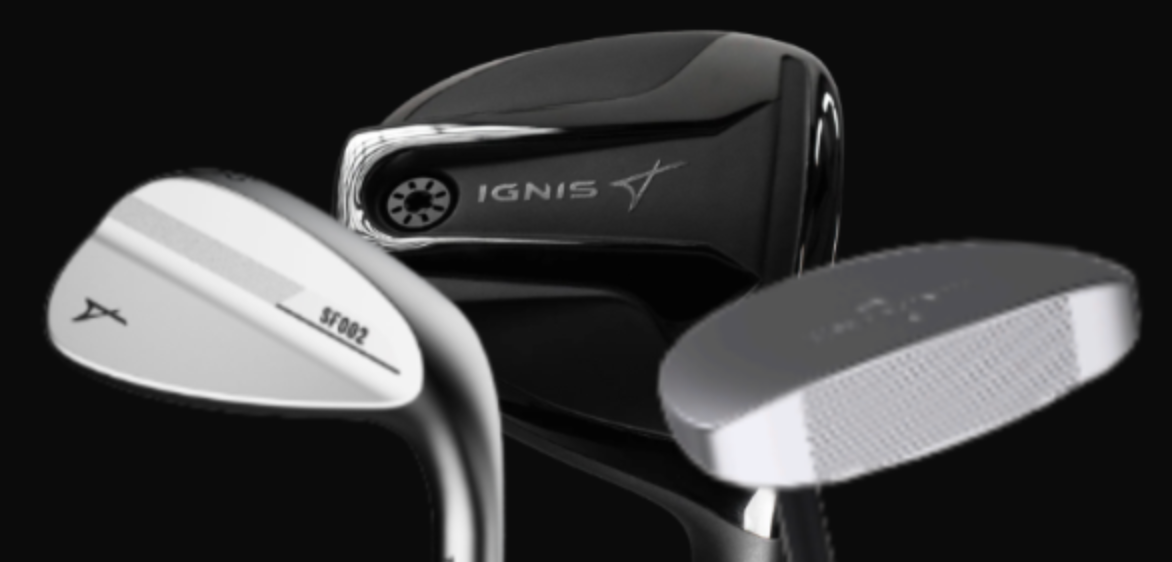




Hit a driver and a lob wedge with the same swing, and one ball flies low and long while the other climbs and drops a short way off. Much of that difference comes down to one angle. So, "what is loft in golf?" It's how far the clubface tilts back when the shaft stands straight up, measured in degrees.
That tilt shapes the ball's entire flight, and it increases a few degrees with each club from the driver to the wedges. The number on an iron won't tell you its loft, though, since the 7 on one type of iron can carry 5 degrees more than the 7 on another, and your swing changes it again at impact.
What Is Loft in Golf Doing to the Ball After You Hit It?

Everything the ball does after it leaves the face traces back to the angle it met at impact. Loft sets how high the ball launches, how much it spins in the air, and how far it rolls once it lands.
More Loft Sends the Ball Higher and Shorter
A face that leans back works like a steeper ramp. The ball leaves at a higher launch angle, so more of the swing's energy goes into height and less into forward speed.
According to TrackMan, the average PGA Tour player launches the driver at 10.4 degrees and carries it 282 yards. The pitching wedge launches at 23.7 degrees and carries 142 yards. The wedge carries about half as far, even with the same players using a full swing.
Loft Is Where Backspin Comes From
A lofted face meets the ball with a glancing blow instead of a square hit. That glancing contact is what makes the ball spin backward, and more loft means more spin.
On tour, the driver averages 2,545 rpm of backspin, according to TrackMan, while the pitching wedge averages 9,316 rpm. That spin also helps a wedge shot climb high, even though the ball leaves the face with far less speed than a drive.
Why Low-Lofted Shots Roll Farther After Landing
A low-lofted shot lands at a shallower angle, so it keeps moving forward after it lands. The same tour averages put the driver's landing angle at 39 degrees, against 52 for the pitching wedge.
That's why the driver runs out down the fairway while a wedge stops close to its pitch mark.
How Much Loft Every Club in Your Bag Has

Loft climbs steadily from the driver to the wedges, with the putter as the odd one out. Every club from Takomo Golf sits inside the typical range for its slot, and the chart lists both, degree by degree.
| Club | Typical Loft | Takomo Loft |
|---|---|---|
| Driver | 8–12° | 9° or 10.5° (IGNIS D2) |
| 3-Wood | 13–16° | 15° (IGNIS D2) |
| 5-Wood | 17–19° | 18° (IGNIS D2) |
| 7-Wood | 20–22° | 21° (IGNIS D2) |
| Hybrid or Driving Iron | 18–28° | 18–22° (101U driving iron) |
| 4-Iron | 19–24° | 22–23° |
| 5-Iron | 21–27° | 23–26° |
| 6-Iron | 25–30° | 26–30° |
| 7-Iron | 28–34° | 29–34° |
| 8-Iron | 32–38° | 33–38° |
| 9-Iron | 36–42° | 38–42° |
| Pitching Wedge | 42–48° | 43–47° |
| Gap Wedge | 48–52° | 48–52° (101 MKII, SF002) |
| Sand Wedge | 54–58° | 54–58° (SF002) |
| Lob Wedge | 58–62° | 58–60° (SF002) |
| Putter | 2–4° | 3° |
Takomo's iron lofts run from the 101 MKII at the strong end, a set that starts at the 5-iron, to the 301 irons at the traditional end. Each step down the chart adds a few degrees and reduces distance, so every club has its own yardage. The driver, the fairway woods, and the wedges are where choosing that loft takes the most thought:
- Driver: It has the least loft of any full-swing club, so a slower swing can struggle to launch it high enough. A 10.5-degree head is the usual starting point, and slower swings often do better around 12. On the IGNIS D2 driver, the 10.5-degree head reaches 12.5 with the sleeve's +2 setting, which also makes the lie a little more upright.
- Fairway woods: They carry enough extra loft to launch the ball off the grass and fill the space between the driver and your longest iron. The IGNIS D2 fairway wood sleeve moves each loft by up to 2 degrees, so you can even out those gaps.
- Wedges: A common rule is 4 to 6 degrees between them, so each one fills its own distance. The SF002 wedges come in every even loft from 46 to 60 degrees, which makes it easier to cover the gap your iron set leaves.
The Number on Your Iron Isn't Its Loft
The number on an iron tells you its place in the set, not its loft, unlike the degrees printed on a driver or wedge. Brands have been widening iron lofts for decades because a 7-iron that flies farther sells easier.
The spread is real, even inside one brand. Takomo's 101 MKII 7-iron has 29 degrees, the 301 MB 7-iron has 34, and the 101 MKII 6-iron actually matches the 301 MB 5-iron at 26 degrees.
We go both ways, on purpose. The 101 MKII pairs its stronger lofts with a hollow, forgiving head built to launch the ball high, while the forged 301 MB keeps traditional lofts for ball strikers who want control.
So read the spec sheet, not the stamp. A 43-degree pitching wedge leaves a 13-degree jump to a 56-degree sand wedge, and the 101 MKII set adds a 48-degree gap wedge to split that gap.
Static Loft vs Dynamic Loft at Impact
Every number so far is static loft, measured with the club sitting still. Dynamic loft is what the face actually shows the ball at impact, and your swing decides how far the two drift apart.
How Your Hands Turn Static Loft Into Dynamic Loft
When your hands lead, and the shaft leans toward the target, the face loses loft, so the ball flies lower and farther than the spec suggests. Trying to lift the ball does the opposite, adding loft until the shot floats and falls short. Slopes shift it too, since an uphill lie adds loft and a downhill lie takes some away.
How Dynamic Loft and Angle of Attack Create Spin
Spin loft is the gap between dynamic loft and the angle of attack, the direction the clubhead moves into the ball. The bigger that gap, the more the ball spins.
On tour, the pitching wedge comes in 4.7 degrees down with a lot of loft, while the driver comes in just 0.9 degrees down with very little. Hitting slightly up on the driver shrinks spin loft even more, so the ball launches higher, spins less, and carries farther.
How to Pick the Right Loft for Your Swing

Dropping loft seems like an easy way to add distance, but it only works if your swing is fast enough to get the ball up without it.
Your ball flight is the first clue. Shots that fly low and drop early need more loft, while shots that balloon and float can use less. Your clubhead speed decides how much loft you can actually turn into distance.
Loft sets a shot's height, and lie angle sets its direction by determining whether the face points at your target when the sole meets the ground. The more loft a club has, the more a poor lie angle pulls the ball offline, which is why a fitting checks both together.
Match Your Lofts to the Swing You Have
Loft decides how high each shot goes, how far it carries, and how quickly it stops. The right amount is whatever launches the ball well for your swing and leaves a clear distance for each club.
If you're not sure which iron set suits your swing, Takomo's fitting tool starts from your 7-iron speed or carry and recommends the iron head, shaft, and lie angle that fit your game.
FAQs About Golf Club Loft
What Is a Loft Wedge in Golf?
"Loft wedge" is a common name for the lob wedge, the highest-lofted club in most bags at about 58 to 62 degrees. It hits the shortest, highest full shots, like a pitch over a bunker to a pin near the edge.
Does Loft Affect How Straight the Ball Flies?
Yes. More loft adds backspin, and backspin keeps sidespin from tilting the ball's flight as much. That's why the same mistake curves a drive far more than a wedge shot.
Can You Change the Loft on a Golf Club?
Yes, within limits. Many drivers and fairway woods have an adjustable sleeve that changes loft by a degree or two. A club fitter can usually bend forged irons and wedges about the same amount, while cast heads allow much less.


