


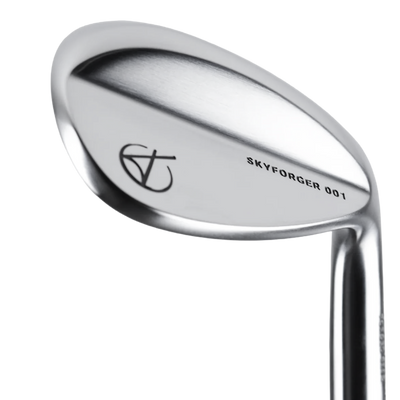


Set any iron down at the address and look at the shaft. It rests at an angle to the ground, and that angle is your golf club lie angle. When the angle is wrong, the face points offline, and the ball leaks left or right even on a flush strike. It shapes your shots whether you know your number or not.
Takomo Golf delivers clean, high-quality irons without the inflated price tag, the kind you pick around your own swing, not a rack standard. Its fitting tool that carries that same fit into the numbers, dialing in every spec that moves the ball, lie angle included.
What Your Golf Club Lie Angle Actually Is
The lie angle is the angle the shaft makes with the ground at address, expressed as a number in degrees. It runs from around 56 on a driver to 64 on a wedge, and every club has its own standard. Anything off that standard is just so many degrees flat or upright.
Why Lie Angle Changes at Impact

Static lie angle is what you measure at rest, with the club sitting on a flat surface at address. Dynamic lie angle is what is actually happening at impact, and the two numbers are often not the same. That gap is what a good fit has to catch.
The shaft does not stay rigid through the swing. Speed, the downswing's force, and the weight of the head all bow it slightly the way a fishing rod bends the second a fish pulls. That droop shifts the effective angle at impact, so a club that looks dialed in at address can play a degree or two flat or upright.
Faster swings bend the shaft more. Slower swings barely move it. That is why two golfers can hold the same club the same way and still get different results. Measuring lie angle during real swings beats reading it off a bench.
How Lie Angle Affects Your Shots
Get the lie angle wrong at impact, and the face points somewhere you never aimed. The ball follows the face, not your eyes, and that is what quietly costs you strokes.
A toe higher than the heel means the club is too upright. The face turns closed, and a right-handed golfer pulls or hooks it left. A heel higher than the toe means too flat, so the face opens and the ball leaks out to the right. On a clock face, too upright points to nine, too flat points to three, and neither sits at noon.
The ugly part is that this happens with a textbook swing. You can do everything right and still watch the ball leak the same way all day, grinding on a fault that actually lives in your equipment.
Signs Your Lie Angle Is Off

Before you book a fitting, a few honest signs tell you whether the lie angle is working against you:
-
You miss the same direction: Shots leak right or left consistently, even on swings that feel clean. If it survives a lesson, look at the equipment.
-
Your sole wears unevenly: Scuff marks bunch on the toe or the heel of your irons instead of the center. Centered contact is what a correct lie angle looks like.
-
Certain clubs misbehave: Long irons push and short irons pull in the same set, a sign that the lie progression does not match your swing.
-
New clubs feel off for no reason: Clubs built to standard specs will not match you if your specs are not standard.
-
Your build or swing plane is unusual: You are notably tall or short, or you swing on a steep or flat plane, and those traits track closely with non-standard lie needs.
These are signs, not a diagnosis. A fitting confirms the cause. But if you recognized three or more, the lie angle is the first thing worth checking.
How Lie Angle Gets Measured
A real fitting moves from the bench to the ball in a simple order:
-
Static check: The club is measured against the manufacturer's standard with a lie gauge.
-
Sole contact test: You hit shots off a lie board with tape on the sole. Heel-heavy reads too upright, toe-heavy reads too flat, and centered is dialed in. You can run a rough version at home with impact tape.
-
Dynamic read: A launch monitor tracks start direction and dispersion across several swings, so the fitter sees what your real swing does, not what the bench says.
-
Adjustment or spec: Steel irons get bent to the number, or the fitter writes down the spec you should order.
Can Lie Angle Be Adjusted?
Yes, most irons and wedges can be bent, typically up to about 2 degrees in either direction. A fitter clamps the hosel and bends the neck up for upright or down for flat, in small increments.
What matters is the head material. Forged iron heads are generally safe to bend. Cast heads are more prone to cracking or failure when adjusted, so check with a qualified fitter first.
Drivers and woods aren't bent this way. Their lie angle is set at purchase or adjusted through an adjustable hosel.
Bending a set you already own is far cheaper than buying new. Get measured first, then adjust what you have.
What Decides Your Ideal Lie Angle

No two golfers need the same number, and height alone does not settle it:
-
Height and arm length: Taller players with longer arms tend toward upright, and shorter players toward flat. It is a starting point, not a verdict.
-
Swing plane: A steep, upright plane usually wants a more upright lie. A flat, around-the-body swing wants to be flatter.
-
Wrist-to-floor measurement: Measured from the wrist crease to the floor, this is the most reliable static predictor fitters use, because it accounts for arm length and posture at once.
A chart gets you close. Your swing decides the rest.
Lie Angle Across the Bag
Lie angle matters for every club, but loft decides how much. The same error barely moves a driver and wrecks a wedge.
Irons are the danger zone because that is where direction wins or loses you the hole. Putter lie is the easiest to overlook, and a few degrees off there starts a makeable putt rolling offline.
|
Club |
Typical Lie Range |
How Much a Lie Error Throws You Off |
|---|---|---|
|
Driver |
56 to 60 degrees |
Low |
|
Hybrids |
57 to 60 degrees |
Low to moderate |
|
Irons |
61 to 63 degrees |
High |
|
Wedges |
63 to 64 degrees |
Very high |
|
Putter |
Varies |
Very high |
The Cheapest Fix in Your Bag
Golfers are playing more seriously than ever. According to the USGA, more than 82 million rounds were posted in 2025, and the number of golfers tracking a Handicap Index climbed more than 8 percent in a year. Yet most of those clubs left the factory built to a standard, not to the golfer swinging them.
That is what makes your lie angle the cheapest real fix in the bag. A fitting and a bend cost a fraction of a new set, and they correct a directional miss that no lesson can touch. Spend hundreds on new irons with the wrong lie, and you just buy the same miss in nicer clubs.
It is the kind of spec we obsess over at Takomo, because a club only helps once it matches the player, not the average. Lie angle is not a detail. It is the foundation for every iron in your bag.
Why Your Lie Angle Is Worth Checking
The angle between your shaft and the ground decides where the ball starts long before your swing gets a vote, and at impact, it is the dynamic number that counts, not the one on the bench. You will never know yours without checking, and checking is the cheap part.
Run the sole-tape test, watch your miss pattern, and if the signs point at your equipment, find your numbers with the fitting tool. A few minutes gets you a personalized lie angle along with head, shaft, and grip, so you stop guessing and start playing clubs that fit.
FAQs About Lie Angle
Is Lie Angle the Same as Loft?
No. Loft controls how high and far the ball flies. Lie angle controls direction. A club can have the right loft and still miss left or right if the lie is off.
Does Lie Angle Affect Distance or Just Direction?
Mostly direction. A wrong lie points the face left or right, so your misses run sideways. It can cost a touch of distance on a bad strike, but the real penalty is where the ball starts.
Can You Feel a Wrong Lie Angle?
No. A wrong lie shows up in your ball flight, not in your hands, so nothing feels off as you swing. That is why it is so easy to chase a swing fix for an equipment problem.
Do Beginners Need to Worry About Lie Angle?
Not necessarily. A beginner's swing changes much early on to chase a precise lie angle fit. What feels like it needs a couple degrees upright today might call for something completely different a few months from now. Once your swing settles down and stays consistent, that's the right time to get fitted and dial in your lie angle.


