




Shaft flex is the single biggest equipment variable most golfers get wrong. Match it to your swing speed and tempo, and you'll hit it farther and straighter. Get it wrong, and even a solid swing produces lousy shots. At Takomo, we believe you deserve honest guidance on the gear decisions that actually matter. Here's how to figure out which flex belongs in your bag.
What Is Shaft Flex?
Shaft flex is how much a golf shaft bends during your swing. Every shaft on the market carries a stiffness rating, typically labeled L (Lady), A (Senior/Amateur), R (Regular), S (Stiff), or X (Extra Stiff). These labels describe how much resistance the shaft offers as it bends under the load of your swing.
Here's what's actually happening. On the downswing, the shaft bends backward relative to the clubhead, storing energy like a compressed spring. At impact, it snaps back and releases that energy into the ball. The timing and magnitude of that release are what flex controls. Get it right and energy transfer is maximized. Get it wrong and the clubface arrives at the ball in the wrong position at the wrong moment.
Most golfers pick a flex based on what came stock on their last set, or worse, what their ego suggests they should be playing. The handicap doesn't lie, but the flex label often does.
Why Shaft Flex Matters More Than Most Golfers Realize
The wrong shaft flex isn't a minor inconvenience. It's actively costing you strokes.
During the downswing, the shaft loads as the clubhead lags behind your hands. At impact, it unloads, snapping forward. If the flex is mismatched to your swing speed and tempo, that unloading happens too early or too late. The result isn't just a slight loss of distance. It's a clubface that arrives open or closed, producing directional misses that look like swing problems but are actually equipment problems.
Research published on PubMed Central (NIH) examined the effects of three different 7-iron shaft weights on golf swing performance across both low- and high-handicap golfers. The results showed measurable differences in clubhead speed and shot distance based on shaft properties, confirming that what's in your hands affects what happens at impact in ways you can see on a launch monitor.
A shaft that's too stiff for your swing speed won't bend enough during the downswing. It never fully loads and releases. The result is a low, weak ball flight that tends to fade right for right-handed golfers. The face simply can't square up in time. Recreational golfers who grab a Stiff shaft before they've earned it with their swing speed are the most common victims.
The opposite is equally damaging. A shaft that's too flexible bends excessively and releases too early, causing the face to close before impact. The result is high, ballooning shots with too much spin that turn into hooks. More flex sounds forgiving. For fast swingers, it's anything but.
The Standard Shaft Flex Ratings (and Why They're Not Actually Standard)
Five flex categories cover the full range of golf shafts sold today. Here's how swing speed maps to each:
|
Flex Label |
Driver Swing Speed |
Typical Player Profile |
|
L (Lady) |
Under 60 mph |
Beginners, juniors, seniors with reduced speed |
|
A (Senior/Amateur) |
60–72 mph |
Senior golfers, slower recreational players |
|
R (Regular) |
70-75 mph |
Most recreational male golfers |
|
S (Stiff) |
80-90 mph |
Better amateurs, competitive players |
|
X (Extra Stiff) |
90+ mph |
Low handicappers, scratch players, professionals |
These ranges are a useful starting point. But here's the critical caveat that most guides bury or skip entirely: there's no industry-wide standard for shaft flex. None.
A Regular shaft from one manufacturer may play as stiff as another brand's Stiff. Some shaft makers use frequency matching to measure stiffness. Others use deflection boards. These methods produce different results for the same shaft, and no governing body requires consistency across brands.
What this means practically: if you buy based on the flex label alone, you're buying based on a label that may not mean the same thing as the last shaft labeled the same way. The table above is a guide, not a guarantee. A fitting is the only way to know what you're actually getting.
How to Find the Right Shaft Flex for Your Swing

Finding the right shaft flex is a four-step process. You don't need to complete all four to get a useful answer, but the more you work through, the more confident you can be.
-
Know your driver swing speed. If you have access to a launch monitor or swing speed radar, use it. If you don't, your average carry distance with your driver is a reliable proxy.
-
Assess your swing tempo and transition. An aggressive, fast transition loads the shaft differently than a smooth, sequential one. This matters more than most golfers realize.
-
Look at your miss patterns. Consistent slices typically suggest a shaft that's too stiff. Consistent hooks with high spin suggest too much flex. Your shot shape is your shaft's report card.
-
Get a professional fitting. Modern launch monitors measure shaft behavior, face angle at impact, spin rate, and carry distance simultaneously. The guesswork disappears.
Quick Carry Distance Guide (When You Don't Have a Launch Monitor)
If a launch monitor isn't accessible, driver carry distance gives you a workable starting estimate:
|
Driver Carry Distance |
Suggested Starting Flex |
|
Under 150 yards |
Lady or Senior |
|
150–220 yards |
Regular |
|
220–280 yards |
Stiff |
|
280+ yards |
Extra Stiff |
Treat these as a starting point, not a prescription. Tempo and shot shape both affect carry distance independently of shaft flex. Confirm with a fitting when you can.
Why Swing Tempo Changes the Equation
Two golfers can swing at 85 mph and need a completely different shaft flex. The difference is tempo and transition aggressiveness.
A golfer with a smooth, unhurried transition who reaches 85 mph loads the shaft gradually, giving a more flexible shaft time to work. That player may perform better with Regular flex than the swing speed chart suggests.
A golfer with an aggressive, fast transition who pulls hard from the top at 85 mph loads the shaft quickly and intensely. That player likely needs Stiff flex even though their speed falls in the Regular range, because their tempo is doing extra work on the shaft. Swing speed is the foundation. Tempo is the refinement.
Does Shaft Flex Change by Club Type?
Yes, and assuming one flex label applies uniformly across your whole bag is a mistake fitting data consistently reveals.
Driver shafts are the longest clubs in your bag, typically 45 to 46 inches. Length itself adds effective flexibility, so even a Stiff driver shaft is relatively pliable compared to shorter clubs. Iron shafts are considerably shorter and therefore play firmer at an equivalent labeled flex. A Stiff iron shaft plays noticeably firmer than a Stiff driver shaft, even from the same manufacturer.
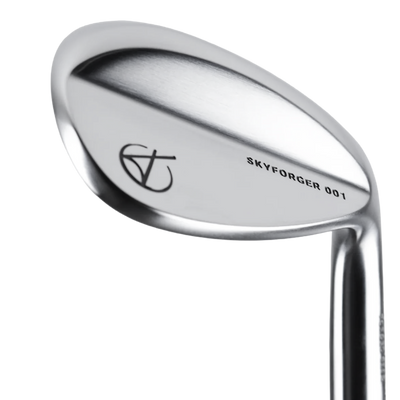
Wedge shafts are typically the firmest in a golfer's bag. Most are steel, most play at the stiffer end of the spectrum, and most golfers choose them for consistent feel and control rather than distance.
A fitting may reveal that you're a Stiff flex driver player and a Regular flex iron player. That's not unusual. Don't assume that buying a full set with matching flex labels is automatically correct for your game. A good fitting evaluates each club category separately, because the physics genuinely differ.
The Hidden Variables Shaft Flex Charts Don't Tell You

Kick Point
Kick point (also called bend point) is the location along the shaft where it bends most during the swing. A low kick point produces higher launch and more spin. A high kick point produces a lower, more penetrating ball flight.
Flex and kick point must be chosen together. A Regular flex shaft with a high kick point plays completely differently than a Regular flex shaft with a low kick point, even if the stiffness measurements are identical. A slower swinger who wants more height should be looking at both a softer flex and a low kick point. Treating flex as the only variable means you might buy the right flex rating and still end up with the wrong ball flight.
Shaft Weight
Shaft weight changes how easy or difficult it is to load the shaft during the swing. A heavier shaft, say 130 grams, requires more force to flex, so it plays stiffer than its label suggests. A lighter shaft, around 90 grams, flexes more easily and plays more flexibly than the same label in a heavier version.
Many golfers who think they need a softer flex actually need a lighter shaft. It's worth testing both variables separately in a fitting before assuming you know which one to change.
Steel vs. Graphite
Steel and graphite shafts use the same flex labels, but they're not equivalent. Graphite shafts are lighter, typically by 30 to 50 grams, and they dampen vibration more effectively. They produce higher launch and feel softer at impact. Steel shafts are heavier, offer more consistent tactile feedback, and typically produce a lower, more boring trajectory.
A golfer transitioning from Regular steel irons to graphite for the first time may find that Regular graphite plays significantly more flexible than what they're used to. Many golfers making this switch should start by testing graphite Stiff before assuming Regular suits them. A fitting when changing shaft materials isn't optional. It's how you avoid ending up with clubs that are technically higher quality but actually perform worse for your current swing.
Find the Right Flex for Your Swing
Shaft flex is one of the few equipment variables where getting it right genuinely changes how you play. Not because better gear fixes your swing, but because the right flex stops your gear from undermining a good one.
Start with your swing speed and carry distance, factor in your tempo and miss patterns, and get fitted when you can. Not sure where to begin? Take Takomo's Fitting Tool and get a personalized club recommendation in under four minutes.
FAQs about Shaft Flexes
What shaft flex should a beginner use?
Most beginners benefit from Regular or Senior flex. These produce higher launch and more forgiveness, which helps players still developing contact consistency. Use the swing speed benchmarks in this guide as a starting point, but get on a launch monitor when possible.
Can the wrong shaft flex cause a slice or hook?
Yes. A shaft that's too stiff can leave the face open at impact, producing a fade or slice. A shaft that's too flexible allows the face to close too early, creating a draw or hook. If you've been working on your slice without improvement, your shaft flex is worth examining.
How often should I re-evaluate my shaft flex?
Every two to three years is a reasonable baseline, or whenever something significant changes: a swing overhaul, injury recovery, or the gradual speed loss that comes with age. Juniors could be re-fitted annually since physical development changes swing speed quickly.
What's the difference between shaft flex and torque?
Flex measures how much the shaft bends along its length. Torque measures how much it resists twisting around its own axis. Both affect how the clubface arrives at the ball. A fitting that addresses both produces better results than one that only checks swing speed against a chart.


