



Add an inch to a driver, and the head swings faster. Take an inch off, and the center of the face gets easier to find. At about 45.75 inches for men, the standard driver length favors speed, but yours should be the longest one you can actually hit in the center.
Your arms and a few range balls can show you that length before you cut anything, and a club fitting starts with the same checks.
What Is the Standard Driver Length?

Most men's drivers leave the factory between 45.5 and 46 inches, and 45.75 is the length you'll see most often. Women's models usually run 44 to 44.75 inches. The number shifts a little from brand to brand and from shaft to shaft, so two charts can disagree by half an inch.
Drivers weren't always this long. Decades ago, a driver measured closer to 43 inches, about where a 3-wood sits today, and shafts grew as heads got bigger and more forgiving. The rules still allow clubs up to 48 inches, but a driver that long is hard to hit in the center of the face.
Why a Longer Driver Rarely Goes Farther
A longer driver does swing faster, but it also makes the center of the face harder to find. On paper, a wider arc means a faster head and a longer drive. On the course, off-center hits give that speed back.
Ball Speed Comes From the Center of the Face
Ball speed peaks when you strike the center of the face, and it determines distance more than club speed. Smash factor shows how close you got. It's ball speed divided by clubhead speed, and a well-struck driver gets close to 1.5.
Miss toward the toe or heel, and that number drops. The ball leaves slower, picks up sidespin, and curves more. A slightly slower swing that finds the center can carry past a faster one that doesn't, which is why the extra inch often adds nothing you can see on the scorecard.
Why Tour Players Cut Their Drivers Down
Tour players give up about an inch of length because a repeatable strike matters more to them than a few extra miles per hour. Most use drivers around 44.5 to 45 inches, and they swing fast enough to still reach the long holes. A fairway drive is easier to score from than one in the rough.
Length at the top level is capped, too. Since 2022, a Model Local Rule from the USGA and The R&A has let pro and elite amateur events limit clubs to 46 inches. Recreational golfers aren't bound by it, so the 48-inch limit still applies to everyone else.
How to Find the Driver Length That Fits You

Three checks show the length you can actually control, and none of them needs a new club. Do them in order, since your measurements point to a direction and your strike marks and range balls confirm it.
Start With Your Height and Wrist-to-Floor
Height is the usual starting point, but arm length matters just as much. Two golfers who are both six feet tall can need different drivers if one has longer arms.
The wrist-to-floor measurement captures both. Stand on a hard floor in flat shoes, let your arms hang relaxed, and have someone measure from your wrist crease to the floor. Take it twice, and trust it once both readings land within about a quarter inch.
A short reading means your hands hang low, so a stock driver can feel long and stand you up too tall at address. A long reading means your hands sit higher, and stock length may fit fine or even feel a touch short. Treat the result as a starting point.
Read Your Strike Pattern and Your Miss
Your current driver already tells you a lot. Spray the face with foot powder or put on impact tape, hit 10 drives, and look at where the marks land.
A tight cluster near the center says your length is working. Marks spread toward the heel and toe, or misses that go both left and right, point to a club that's hard to control. A quick, aggressive transition adds to the problem, because a longer club gives a fast tempo more to manage. Length isn't the only cause of a scattered pattern, but it's the cheapest one to test.
Test a Shorter Driver by Choking Down
Choking down on the grip shortens your driver for free, so you can see what a shorter one would do before you cut anything. Nobody on the range will know you're running a fitting. Keep the same target, tee height, and ball position for every group:
- Hit 10 balls with your normal grip and note where they strike the face, where they start, and how far they carry.
- Choke down half an inch and hit 10 more.
- Choke down a full inch and hit 10 more.
- Compare the three groups.
If the face marks tighten and carry drops only a few yards, a shorter driver suits you. If nothing changes, length isn't what's holding you back, and stock length can stay. Go longer only if your strike already holds in the center at stock length, and even then the change is usually small.
What Changes When You Cut a Driver Down

A shorter shaft moves three other specs with it:
- Swing weight: It drops a few points with every cut, so the head feels lighter. A fitter brings the swing weight back up with lead tape or a heavier head weight.
- Lie angle: A shorter club sits a little flatter at address, which can shift your start line. A fitter can check whether your lie angle still fits after the cut.
- Shaft flex: A shorter shaft plays a little stiffer, because there's less of it to bend. Cut a full inch or more, and the difference becomes easier to feel.
Take it off half an inch at a time, and let a fitter rebalance the head after each cut. You can always cut more later, but adding length back means fitting an extension.
Let Center Contact Decide Your Length
Stock length is a sensible place to start. The right driver for you is the longest one you can still hit in the middle of the face, and your measurements, your strike marks, and a few range balls will show you where that is.
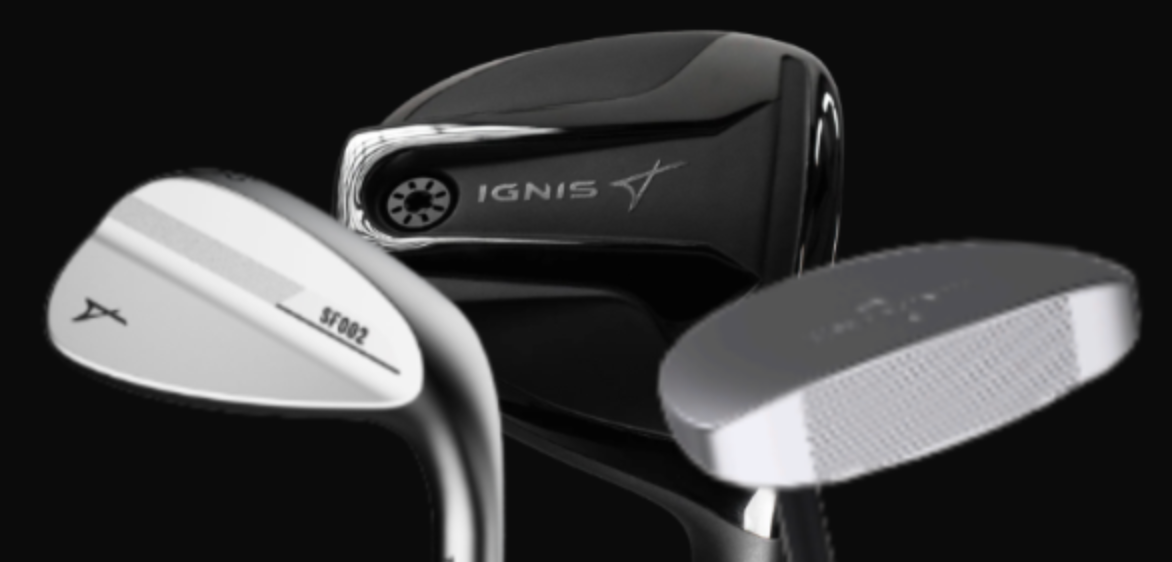
If you're shopping for a new driver, the IGNIS D2 driver comes at the standard 45.75 inches with a 3g weight in the head. Takomo also includes an 8g weight for golfers who choose to play a shorter shaft, so if your test points are shorter, it can put back the head feel a cut takes away.
FAQs About Driver Length
How Is Driver Length Measured?
The club rests on a flat surface with its sole set against a 60-degree plane, and the length runs from where the two planes meet to the top of the grip. Not every brand measures the same way, so two drivers listed at 45.75 inches don't always match on a ruler.
Is 44.5 Inches a Good Driver Length?
Yes, for many golfers, as long as the cut is done right. Getting there means trimming about an inch and a quarter from stock, so plan on adding head weight and have a fitter check that the shaft still suits your swing.
Is a 46-Inch Driver Too Long?
Only if you can't find the middle of the face with it. It sits at the long end of stock, and it's also the longest driver allowed in pro events that use the 46-inch Model Local Rule.
Do Your Fairway Woods Need to Change Too?
Usually not, but check your gaps. A shorter driver carries a little closer to your 3-wood, so make sure each club still gives you a different distance. Fairway woods are already shorter than a driver, so they tend to stay as they are.


