


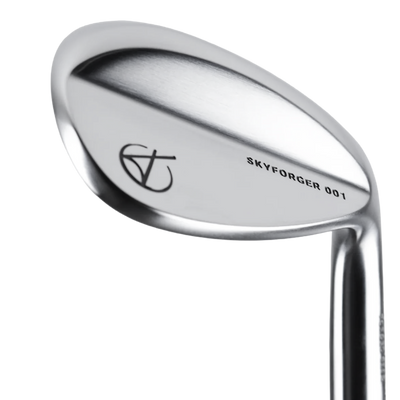


Most golfers are playing clubs built for an average that doesn't actually exist. Every manufacturer has to pick a default length, lie angle, and shaft flex for the mass market, and that default is a guess about a golfer who looks nothing like the person holding the club. Custom club fitting closes that gap. It matches your equipment to your actual swing instead of a spec sheet built for someone else.
Why Fitted Golf Clubs Change the Way You Play
Properly fitted clubs don't fix your swing. They stop fighting it. The difference usually shows up as more consistent contact and fewer shots that leave you shaking your head, not as an overnight transformation.
This isn't a niche idea anymore. According to Dataintelo's Golf Club Fitting Services Market Research Report, the market was valued at $1.48 billion in 2024 and is projected to reach $2.68 billion by 2033, growing at roughly 6.7% a year.
And it's not just an industry talking point. Golf Datatech's Evolution of Custom Fitting study found that 80% of serious golfers have been custom fit at some point in their golfing lives, including 30% within the past year.
What's Included in an Iron Fitting
A custom fitting is more structured than most golfers expect, and far less intimidating. Here's what the process typically covers:
-
Swing analysis using launch monitor data to capture ball speed, launch angle, spin rate, and shot shape
-
Shaft flex and length evaluation based on your swing speed and tempo
-
Grip size check to confirm your hands can actually control the club
-
Loft and lie angle assessment to help square the face at impact
-
Ball flight feedback so you can see the difference in real time
At Takomo, fitting focuses specifically on irons, since that's the category we build. If you're working with an existing set, a fitting will tell you whether your current setup is actually costing you shots, or whether it's your swing doing the talking.
The Fitting Detail Most Golfers Never Hear About: Swingweight
Swing weight is one of the least talked-about variables in club fitting, and one of the more important ones. It describes how heavy the clubhead feels relative to the grip end during the swing, not the club's total weight.
A head that feels too heavy slows your tempo and costs you control. One that feels too light makes it harder to sense where the clubhead is at impact, which shows up as inconsistent contact. Swingweight usually gets adjusted by changing shaft weight or adding weight to the head itself, which is why it's not something every fitting process addresses directly. Still, it's worth knowing it exists. It's part of why two clubs with identical specs on paper can feel completely different in your hands.
What to Actually Expect From a Fitting

Before a fitting, most golfers are playing equipment built for someone else's swing speed, height, and tempo. After, the goal is straightforward: the ball starts going where you're actually aiming, more often.
Expect more consistent iron distances round to round, and straighter shots if your current lie angle has been sending the ball left or right of your target. What you shouldn't expect is a guaranteed number of extra yards or strokes. A fitting removes friction between you and your equipment. Your swing still has to do the rest.
Ready to Find Your Fit?
If you've got a swing you can repeat, a fitting will show you exactly where your current irons are holding you back. If you're still finding your swing, start with a solid stock set and come back to fitting once things settle in.
Takomo's irons are Finnish-designed, and according to MyGolfSpy's 2026 Most Wanted testing, the 101 MKII was named Best Game-Improvement Iron of 2026, scoring 9.2 overall and 9.5 for accuracy across 260 hours of testing and 12,480 shots against 13 competing irons. That's not our copywriting. That's an outside lab with no reason to go easy on us.
Take the Fitting Tool to see which iron actually matches your swing, or go straight to the 101 MKII if you want to start with the model that just won.
FAQs About Fitting Golf Clubs
Do I need to be a good golfer to get fitted?
Not necessarily, but fitting works best once your swing repeats. If your mechanics are still changing round to round, a fitting is aiming at a moving target, and adjustments like lie angle may not hold up as your swing settles in. If you're just starting out, playing a solid stock set first and building some consistency is usually the better move. If you're on the fence, err toward getting fit. It won't hurt.
What if I already own clubs?
Fitting works whether you're optimizing your current irons or picking out something new. It'll show you whether your existing set is part of the problem.
How long does it take?
A focused iron fitting typically runs 30 to 60 minutes. Fitting golf clubs isn't a premium add-on reserved for scratch players. It's the process of making sure the irons in your bag were actually built for you, not for an average player nobody really is. If you'd rather skip the appointment, Takomo's fitting tool takes just a few minutes online and gives you a personalized recommendation based on your game.


