



Take a 7 wood into a long par 3, and the ball climbs fast and lands soft enough to stay on the green. That high, soft flight from long range is what sets it apart from the other fairway woods in your bag. So the honest answer is that not every golfer needs 7 wood golf clubs. You need one when nothing else in your bag can land the ball that softly from that far out.
A slow swing or heavy rough makes the case stronger, while wind and firm ground weaken it. Adding one also means another club comes out of a 14-club bag, and a few parts of the head and shaft decide which model actually fits.
Signs a 7 Wood Golf Club Belongs in Your Bag

A 7 wood is a fairway wood with about 21 degrees of loft. Four signs show it has a real job to do in your bag, and the more that match your game, the stronger the case for carrying one.
Your Long Irons Come Out Low or Thin
Long irons need speed and a precise strike to get airborne. Catch one a little thin, and the ball comes out low, runs out, and rarely holds the green.
A 7 wood has its weight set low and back in a wider head. That gets the ball up from the same lie with less effort and more margin on a mishit. If you trust your 4-iron or 5-iron the least, that's the clearest sign.
There's a Yardage Hole Above Your Longest Iron
A 7 wood earns a spot when the jump from your shortest wood to your longest iron or hybrid is too big. Clubs at the top of the bag work best about 10 to 15 yards apart. When the gap is much bigger, you're left with awkward half swings on any approach in between.
Check your carry with each of those clubs on the range. The 5 vs 7 wood gap is often only about 10 yards for a mid-handicapper, so carrying both can mean two clubs for nearly the same shot. To fill the gap above your irons, the 7 wood is usually the better pick, since its extra loft gets the ball up more easily and stops it faster on the green.
Your Swing Speed Needs Help Getting the Ball Up
Height comes from loft and speed working together. A slower swing can't create enough of it with a long iron's loft and small head. The ball peaks early and drops out of the sky short of the target.
A 7 wood adds height through its low center of gravity and its longer shaft, so the ball stays in the air longer. It's physics. That's why it suits any golfer with a slower swing, including one whose speed has dropped over the years.
Your Course Puts You in Light Rough Often
A 7 wood has a shallow face and a wide sole that slides across the grass instead of digging. From the first cut or light rough, it gets under the ball more easily than a long iron does.
In heavy rough, a hybrid's sharper leading edge cuts through thick grass better, so that's the club to reach for there.
When You Can Skip the 7 Wood
You don't need a 7 wood if your long irons already get the ball up and hold the green. It would only add a second club for the same distance. Long irons also give you a lower flight that's easier to curve on purpose, which matters if you like to shape shots.
Wind and firm ground are the other reasons to pass. A strong headwind catches the 7 wood's high flight and cuts its distance. On firm turf, a lower shot from a hybrid or long iron actually rolls farther, while the 7 wood stops much sooner.
What a 7 Wood Replaces in Your Bag

The R&A limits every player to 14 clubs, so adding a 7 wood means another club has to come out. The usual swaps are a 4-iron, a 5-iron, or a 4-hybrid, since all three cover a similar yardage. The right one to drop depends on how each flies for you.
| 7 Wood | 4-Hybrid | 4-Iron | |
|---|---|---|---|
| Ball flight | Highest, lands soft | Mid-high | Lowest, most piercing |
| Forgiveness | Most | Moderate | Least |
| Best lies | Fairway, tee, light rough | Most lies, including thicker rough | Clean fairway lies |
| In the wind | Most affected | Holds up better | Holds up best |
| Shaping shots | Hardest | Moderate | Easiest |
If the 4-iron is the club you hit least well, it's usually the one to swap. If you already carry a hybrid you trust, hit both on the range and keep the one that holds greens more often. Looking at all the clubs in your bag, from driver to wedges, makes it easier to spot which one does the least work.
What to Look for Before You Buy a 7 Wood
Once you know a 7 wood belongs in your bag, four parts decide how well it suits your swing. You can check all of them on any model:
- Loft and sleeve: Most 7 woods start around 21 degrees, and an adjustable sleeve can move that a degree or two. The 7 wood loft you need depends on your speed and the gap you're filling.
- Face forgiveness: A face that's thinner toward the edges keeps the ball speed up on heel and toe strikes. That keeps a mishit from coming up well short of the green.
- Shaft flex and weight: A 7 wood uses a wood shaft at about 42 inches, longer than any iron. Match the shaft flex and weight to your swing speed and tempo, so the face squares up on time.
- Sole shape: A wide, rounded sole glides across tight fairways and light rough instead of digging. It also forgives a strike that catches a little turf first.
Beyond those four, lie angle matters on a wood too. If good swings with your 7 wood keep starting left of target, the toe may be sitting too high at impact for a right-handed player. A flatter lie setting on an adjustable sleeve can straighten that out.
Where the IGNIS D2 7 Wood Fits

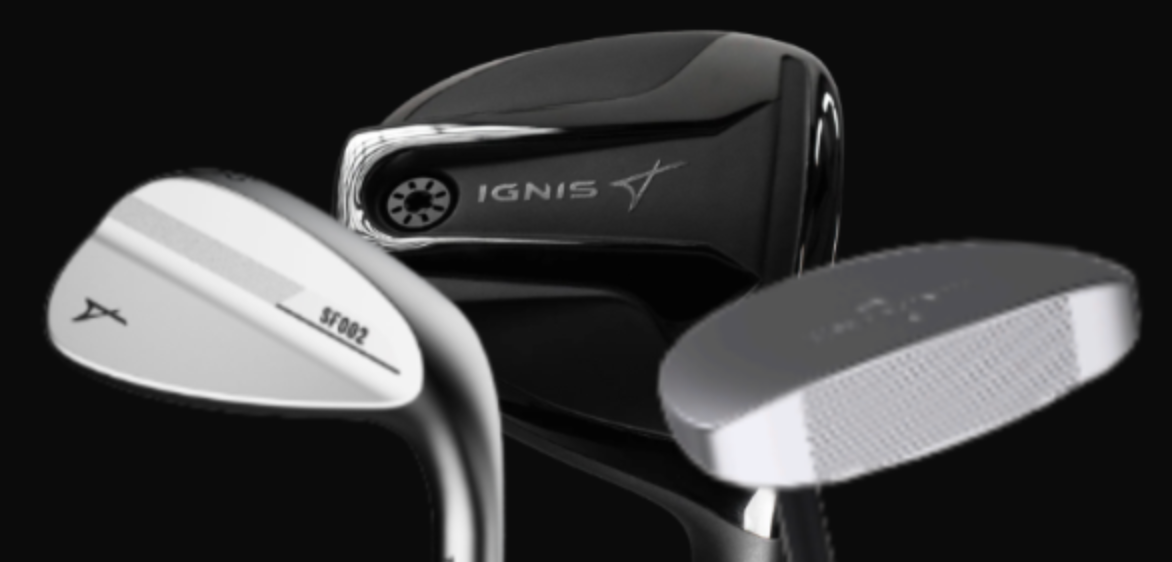
Takomo's IGNIS D2 fairway wood comes in a 7 wood version. It has 21 degrees of loft, a carbon crown that keeps the weight low for an easier launch, and a face that helps keep ball speed up when you miss the center. At Takomo, we kept that face neutral, with no built-in draw, so the ball starts where your swing sends it.
It's made for mid- to high-handicap golfers who want accuracy and forgiveness more than maximum distance. The sleeve adjusts loft by up to 2 degrees and has upright and flat lie settings. Shaft options range from a lighter Fujikura Ventus Red 5 A to a Ventus Blue in X flex. In a Trackman test of the D2 woods, the 7 wood landed soft and stopped quickly.
Match the 7 Wood to Your Long Game
A 7 wood earns its place when it gives you a long shot you can launch easily and stop on the green. Test it next to your long irons on the range, and keep whichever club does that job better.
If the 7 wood wins, the IGNIS D2 fairway wood offers one with a forgiving face and a sleeve to fine-tune loft and lie.
FAQs About the 7 Wood
Is a 7 Wood a Good Club Off the Tee?
Yes, especially on tight par 4s where a driver brings trouble into play. It flies shorter and straighter than a driver or 3 wood. Tee it low, just above the grass, and sweep it the same way you would off the fairway.
Can a Beginner Use a 7 Wood?
Yes. It's shorter than a 3 wood, which makes it easier to control while your swing is still developing. Start with it from the fairway and the tee, then try it from light rough once your contact feels consistent.
What Shaft Flex Should a 7 Wood Have?
A 7 wood usually takes the same flex as your other woods. A shaft that's too stiff tends to send the ball low and right for a right-handed player.


