




How many clubs in a golf bag can you carry? The max is 14, and most golfers know that number. Fewer know how to actually build a setup that fits the way they play. This guide covers the real rule, what each type of club is for, and how to stop filling slots just because the bag has them.
How Many Clubs in a Golf Bag? 14 Is the Max
The maximum number of clubs in a golf bag during a round is 14. The USGA established the limit in 1938, with the R&A following in 1939. The reason was simple: in the 1930s, some players were showing up with 25 or more clubs, with reports of competitors carrying as many as 30. The governing bodies decided the game should be about skill, not how many specialty clubs your wallet could afford. So they capped it at 14.
What’s important to know is that 14 is a ceiling, not a requirement. You can play a perfectly legal round with 1 club, 7 clubs, or 13. There is no minimum. Nothing in the rules says you have to fill every slot.
That distinction matters more than people realize. Most golfers treat 14 like a checklist instead of a budget. It isn't. It's a limit on how many tools you're allowed to bring, not a guarantee that bringing all 14 will make you better.
What Goes in a Golf Bag? The Five Categories
A standard bag covers five club categories, each handling a specific distance window or shot type.
Driver (1 club). Your longest club, lowest loft, built for one job: hitting the ball as far as possible off the tee.
Fairway woods (1 to 2 clubs). For long shots from the fairway or off the tee on holes where the driver is too much. A 3-wood is the most common, sometimes paired with a 5-wood.
Hybrids (1 to 2 clubs). These bridge the gap between long irons and fairway woods. They launch easier and tend to be more forgiving on off-center hits, which is why a lot of golfers swap their hardest-to-hit long irons for hybrids.
Irons (5 to 7 clubs). Usually a 4-iron or 5-iron through a 9-iron. Each iron club covers a specific distance window, and the gaps between them are what let you actually attack a pin instead of just aiming for "somewhere near the green." This is the part of the bag that does most of the work on a typical par 4. It's also the part of the bag we obsess over at Takomo, because we think iron sets shouldn't cost what most brands ask you to pay for them.
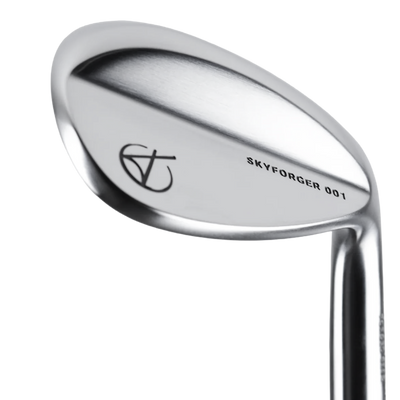
Wedges (2 to 4 clubs). Short-game tools for shots inside roughly 120 yards. A pitching wedge usually comes with your iron set. From there, gap, sand, and lob wedges handle the touch shots, bunkers, and anything that calls for a high, soft landing.
Putter (1 club). The most-used club in the bag by a wide margin, statistically speaking.
A Standard 14-Club Setup
A common setup looks like this:

This is one valid configuration of many. Plenty of golfers swap a long iron for a second hybrid, or drop a wedge for a 5-wood, or cut a wedge entirely. The setup that works for someone playing a windy links course in Scotland isn't the same as the one that works on a tight tree-lined course in Ontario. Build for the courses you actually play.
Do You Have to Carry 14? Almost Certainly Not.

No. And for most amateur golfers, you probably shouldn't.
Fourteen is the legal maximum. It is not a recommendation. A lot of teaching pros suggest beginners start with closer to 7 to 10 clubs, because fewer clubs means fewer decisions, faster rounds, and more reps with the clubs that actually matter while you're learning.
Here's a rough framework based on where you are in your golf life:
Beginners (handicap 25+): 7 to 10 clubs is plenty. A driver, a hybrid or fairway wood, a 6-iron or 7-iron, a 9-iron, a pitching wedge, a sand wedge, and a putter will get you around any golf course. You are not losing strokes because you don't own a 4-iron. You are losing strokes because golf is hard. Spend less time agonizing over what's missing from the bag and more time hitting balls.
Intermediate players (handicap 10 to 24): 11 to 13 clubs. This is where filling in distance gaps starts to actually pay off. A complete iron set, a fairway wood, maybe a hybrid, plus your wedges and putter. You're starting to know your yardages, and clubs that fill specific gaps earn their slots.
Experienced players (handicap under 10): Full 14. At this level, precise distance gapping and shot-shape options translate to real scoring. Every club has a job no other club can do.
The honest truth is that the golf industry would love for every beginner to walk into a pro shop and drop $2,000 on a full 14-club setup. You don't need it. You need a few clubs you can actually hit and a willingness to practice.
Building a Bag That Actually Makes Sense
The concept that runs the whole exercise is club gapping. Every club should cover a distance range that no other club in your bag covers. Roughly 10 to 15 yards between clubs is the standard target. If two clubs go the same distance, one of them is taking up space that could go to a club you'd actually use.
Start with what you know. How far do you hit your 7-iron? Your driver? Your pitching wedge? If you don't know, that's the first problem to solve, because everything in this section depends on it. Go to a range with a launch monitor or use a rangefinder on the course for a few rounds and write down your real numbers. Not your "I caught one perfect that one time" numbers. Your honest average.
Once you have your distances, look for gaps. The two places golfers most often have gapping problems:
The long end. A lot of amateurs carry a 4-iron they hit one out of ten times. If your 5-iron and 4-iron both go the same distance because you can't compress the 4 reliably, the 4 is dead weight. Replace it with a hybrid that actually launches.
The wedge zone. This is where slots get wasted most often. Carrying a 52-degree and a 54-degree wedge is essentially using two slots for one job. Map out your carry distances. If your pitching wedge goes 115 yards and your sand wedge goes 85, that 30-yard gap is exactly where a gap wedge earns its keep.
The goal is not to fill 14 slots. It's to make sure every slot you do fill has a job that nothing else in the bag can do.
What Happens If You Carry Too Many Clubs?

Exceeding the 14-club limit triggers a penalty under Rule 4.1b of the Rules of Golf. The penalty depends on the format you're playing.
Stroke play: Two penalty strokes for each hole where the breach occurred, with a maximum of four strokes per round.
Match play: A match-score adjustment of one hole deducted for each hole where the breach occurred, with a maximum of two holes deducted per round.
The breach happens the moment you start a round with more than 14 clubs in your bag. You don't have to make a stroke with the extra club for the penalty to apply. If a borrowed wedge got left in your bag from a casual round last week and you tee off without checking, you're already in breach.
The moment you become aware you have an extra club, you must immediately take it out of play. The standard method is turning the club upside down in your bag and declaring it out of play to your group. Once that's done, the penalty stops accruing on future holes. Failing to declare it out of play once you know is a disqualification offense, so don't try to play it cool.
Real-world example: at the 2024 Shriners Children's Open, PGA Tour pro Joel Dahmen discovered he had 15 clubs in his bag on the fourth tee. The result was a four-stroke penalty (two strokes for each of the first two holes, capped at the maximum). It happens to professionals with caddies. It can happen to you. Count your clubs on the first tee. It takes five seconds.
Is 14 Clubs Actually Too Many?
For a lot of weekend players, yes.
Here's the uncomfortable take: most amateur golfers can't tell a meaningful difference between a 4-iron and a 4-hybrid based on shot outcome, because their swing isn't consistent enough for the difference to show up. Adding a 14th club to a bag that already has 13 mostly adds another option to deliberate over on the tee.
Decision fatigue is real. The longer you spend choosing between two clubs that go almost the same distance, the worse you tend to swing both of them. A tighter bag with bigger gaps between clubs forces commitment. Commitment, more than equipment, is what usually saves strokes.
If you've never tried it, take 11 clubs to your next round and leave the redundancies at home. Pick the irons you actually hit well. Carry one fairway wood instead of two. Drop the lob wedge if you never use it. See how the round feels. A lot of golfers who try a stripped-down bag don't go back.
Pick a Setup That Fits You

The 14-club rule is a ceiling, not a setup. The bag that works for you depends on your real yardages, the courses you play, and which clubs you actually trust. Build with intention. Cut the dead weight. Carry what earns its slot.
Whatever you land on, the irons are doing most of the work, and Takomo’s 101 MKII was named Best Game-Improvement Iron of 2026 by MyGolfSpy.
FAQs About the Amount of Golf Clubs in Your Bag
How many clubs can you carry in your golf bag?
A maximum of 14, set by the USGA and R&A in 1938 and 1939 respectively. There is no minimum, so you can legally play with as few as one club.
How many clubs do pro golfers carry?
Almost always exactly 14. They configure their bags for each tournament based on the course, sometimes swapping a fairway wood for an extra wedge, sometimes carrying a driving iron instead of a 3-wood. They use every slot because at their level, every slot translates to scoring.
What's the penalty for too many clubs?
In stroke play, two strokes per hole where the breach occurred, capped at four strokes per round. In match play, a one-hole match-score adjustment per hole where the breach occurred, capped at two holes per round. The breach starts the moment your round begins, not when you make a stroke with the extra club.
Can I add clubs mid-round if I started with fewer than 14?
Yes, as long as you don't go over 14 and the addition doesn't unduly delay play. You can also not borrow one from another player who's also using it during the round.


