


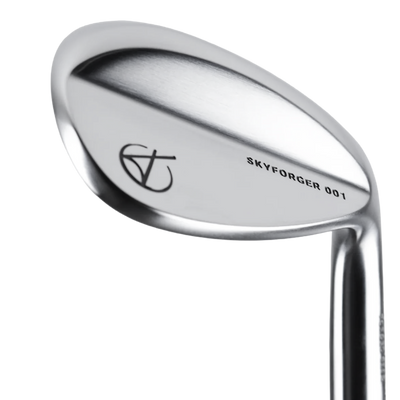


A golf bag doesn't wear out as one piece, and every club ages on its own schedule. So, "how long do golf clubs last?" It comes down to which club you're asking about, how often you play, and how well you maintain them. With basic care, most of a set lasts the better part of a decade. Wedges and drivers wear out first.
Takomo Golf delivers clean, high-quality irons without the inflated price tag, the kind you replace on purpose instead of on a schedule. Before you swap out a full set, read the wear on each one. A worn grip or a clogged groove fools more golfers than a genuinely dead club does.
How Long Do Golf Clubs Last on Average?
The honest answer is: it depends almost entirely on how often you play. Round count is a better predictor than the calendar. A club that's seen 400 rounds is a different club than one that's seen 40, even if both are five years old.
Casual golfers who play 10 to 20 rounds a year can stretch a set well past a decade, since light use barely touches the grooves or the shaft. Play 50 or more rounds a year and you'll wear through the same set much faster, especially on wedges and drivers, where the grooves and face see the most repeated impact.
There's also a gap between physical durability and performance durability. A club can look flawless while worn grooves and a fatigued shaft quietly cost you strokes.
The Keiser University College of Golf estimates drivers last three to five years and irons seven to ten, with wedges wearing out fastest and putters lasting a lifetime. But those numbers assume average play frequency. Treat them as a starting point, not a rule.
|
Club Type |
Typical Lifespan (by rounds played) |
|---|---|
|
Driver |
150–300 rounds |
|
Fairway Woods |
250–450 rounds |
|
Irons |
300–600 rounds |
|
Wedges |
75–150 rounds |
|
Putter |
No real limit, mechanical wear only |
If you play often, count rounds, not years. If you play a handful of times a year, years won't tell you much either. What matters is how much the club has actually done.
How Each Club Type Wears Down

Impact speed determines how fast a club ages. The driver takes the hardest hits, the wedges take the most of them, and the putter barely gets touched. Where that wear lands decides what you replace and what you keep.
Drivers and Fairway Woods Fade Gradually
A driver dies quietly. Titanium faces build micro-fatigue over thousands of high-speed impacts, so the spring effect fades while the club still looks new. Nothing cracks, and the ball just goes shorter.
Round count sets the pace, from three to five years at 50 rounds a year to closer to a decade at 10 to 20. Fairway woods stretch further, since they're not swung at full speed on every shot.
Driver technology also moves every three to four years, so the upgrade itch usually arrives before the wear does.
Irons and Hybrids Are the Workhorses
Irons take more swings than anything else in the bag, and they outlast nearly all of it. Steel heads hold up physically for well over a decade, so groove wear on the scoring irons sets the practical limit instead.
Cast irons resist wear better than forged irons, which run softer for feel and bend out of loft and lie more easily. Hybrids sit between woods and irons, outlasting a driver but wearing faster than a full set.
Irons and hybrids rarely break. You outgrow them.
Wedges Wear Out First
Wedges lose their grooves first, and the face wears from two directions. Bunker sand is abrasive, and wedges take more partial shots and chips than any other club in the bag. MyGolfSpy's own lab testing found spin performance drops off meaningfully by around 75 rounds of wear, and worsens further by 125 rounds.
At 50 rounds a year, that means new wedges every one to two years. The drop isn't subtle. Approach shots run out instead of checking, and your short game leaks strokes before you connect the problem to the clubs.
Putters Can Last a Lifetime
The putter is the one club you may never replace. It never generates high-speed impact, so face wear stays minimal, and a quality putter can last a lifetime unless something physically damages it. Fit, a changed feel preference, or a cracked face insert are the honest reasons to swap one.
What Shortens a Club's Life
Rounds are what wear a club out, and golf is being played more than ever. The National Golf Foundation counted more than 500 million U.S. rounds in 2025, the sixth straight year above that mark.
Two golfers can own the same set and replace it years apart, purely on how often they play. Beyond frequency, a few other factors can also wear out a set.
-
Playing surface: Practice mats grind on soles harder than natural turf, so a range habit wears a set faster than the same number of rounds does.
-
Shaft material: Graphite can crack near the hosel under careless storage, and steel is nearly indestructible but rusts if it goes back in the bag wet.
-
Storage and transport: Heat loosens ferrules and breaks down grip compounds, so a hot trunk ages a set faster than a season of rounds does.
-
Swing mechanics: A steep downswing takes more turf, and thousands of those swings wear a sole down whether you notice it or not.
Signs Your Golf Clubs Are Wearing Out

You can catch a worn club before something snaps. Go through the bag component by component.
-
Grooves: Drag a fingernail across the grooves on your wedges and short irons. Sharp edges catch slightly, worn ones feel flat, and a lob wedge that skips past the hole has lost its bite.
-
Clubface: Check the impact pattern on the driver's face. Dents in titanium are hard to see, and face fatigue is harder still, but both are real.
-
Shaft: Look for hairline cracks in graphite near the hosel, and surface rust or pitting on steel. A club that suddenly flies inconsistently should be checked more closely.
-
Grip: If you're squeezing harder than normal to keep the club from twisting, the tack is gone.
-
Hosel and ferrule: Any play between the head and the shaft is a performance problem and a safety one. Get it checked right away.
Then watch your scores. If your strike consistency has stalled despite steady practice, rule out your equipment before you blame your swing.
How Often Should You Replace Your Grips?
Grips wear faster than any other part of the club, and a slick set is a common reason golfers replace irons that were otherwise fine. Regrip every 40 rounds or once a year, whichever comes first.
A grip that has lost its tack makes your hands work harder to hang on, and that extra pressure restricts your swing and costs you distance. Shiny, glazed rubber, hard or cracked spots, and worn patches where your hands sit all point the same way. What's actually failing there is the grip, not your swing.
How to Make a Set Last Longer
Care beats price. A clean, well-gripped set will outperform a neglected one that cost twice as much. A cleaning routine you actually keep up does most of that work.
-
Clean after every round: Warm, soapy water and a soft brush clear dirt out of the grooves, and the heads should be dry before they go back in the bag. Never soak a graphite shaft.
-
Use headcovers: Bag chatter chips faces and scratches shafts, so woods, hybrids, and the putter should travel covered.
-
Organize the bag: Individual dividers keep shafts from knocking together, a small thing that adds up over years of use.
-
Store clubs at room temperature: Garages, trunks, and sheds trap the humidity that eats into steel and hardens grips.
-
Get an annual check: A fitter can check shaft integrity along with loft and lie, and correcting a spec that has drifted costs a fraction of replacing the club.
A groove sharpener is fine for clearing out an edge that's still there. Never use one to cut a new edge into a worn face, since that changes the club instead of restoring it.
When to Replace and When to Upgrade

Replacement is the simple call. Grooves worn flat on a wedge or short iron, a cracked shaft, a dented driver face, or a loose hosel all mean the club is done, whatever the calendar says.
Upgrading is the judgment call. It earns the money when your game has changed or when a technology gap is wide enough to show up in real numbers. A new model year is not a technological step.
-
Your swing speed has shifted: A shaft flex that fit five years ago can be wrong for the swing you have now.
-
Your ball-striking has improved: You've moved past the forgiveness you needed when you learned the game.
-
Your set is more than 10 years old: Sweet-spot size and forgiveness have moved the most on drivers. Irons from that era often still hold up.
-
You've never been fit: Specs built around your swing beat specs built around an average, and a fitting costs less than the set you would replace.
Between those two calls sits a cheaper one. A regrip, a loft and lie check, or a fresh pair of wedges gives back most of what the wear took, for a fraction of replacing everything. A worn part is not a worn set.
This is where a lot of amateurs waste money. A misfit club gets blamed and replaced when the actual fix was the fit, and a proper fitting often extends a set's life because the clubs finally work with your swing. That's the part we obsess over at Takomo, because a club only earns its slot once it fits the player.
Your Set Lasts as Long as It Fits
A club's lifespan isn't a date on a calendar. It's the point where the club stops keeping up, either with the wear on its face or with the swing you have now. Read that, and you stop replacing clubs that still had years in them.
When a set has genuinely earned its replacement, Takomo's iron sets run from game-improvement to forged players' irons at about half of what the legacy brands charge, and the 101 MKII was named MyGolfSpy's Best Game-Improvement Iron of 2026. Every set can be built with a custom lie angle, shaft length, and grip size at the point of order, so it starts out matched to your swing instead of to an average.
Wear tells you when to replace. When you're ready to find your next set, start with the fitting tool. Four minutes take the guesswork out and point you to the right iron in the lineup.
FAQs About Golf Club Lifespan
How Long Do Golf Irons Typically Last?
There's no single answer, it depends on the player. If you're a casual golfer, your irons can last as long as you want. If you play often and competitively, updating every few years makes sense, not because the clubs wore out, but because your game changed. Most golfers don't replace irons because they broke. They replace them because they outgrew them.
Do Golf Clubs Wear Out in Storage?
The heads don't, but everything soft does. Rubber grips harden and steel shafts pit in a hot or damp space, so a set stored badly can need work before it's played again.
Does a Custom-Fit Set Last Longer Than a Stock One?
Not physically, since the materials are the same either way. What changes is how long it stays useful, because a set built around your swing never gets replaced over a fit problem it never had.
Is It Worth Refurbishing Old Golf Clubs?
Often, yes. Regripping, a loft and lie adjustment, and a groove cleaning restore real performance on structurally sound irons and putters for a fraction of new-club money, though a fatigued driver face has no fix.
Do Expensive Golf Clubs Last Longer Than Budget Clubs?
Not really, at least not in physical durability, since premium and budget clubs often share the same core materials. The real gap is precision, where higher-grade steel and tighter tolerances hold performance longer, which is where honest value beats a big logo.


