



Plenty of fairway wood lists rank heads by brand name, as if launch came shrink-wrapped in the box. It mostly doesn't. The loft you deliver at impact decides how high the ball starts, and a good head simply makes that loft easier to deliver. For most golfers, the highest launching fairway wood they can carry is the most lofted one, a 7 wood at about 21°, with its weight sitting low in the head and a high-launch shaft underneath it.
Below we cover where launch really comes from, why the 3 wood is the hardest fairway wood to get airborne off the turf, what a head and shaft can add, and how to check your own launch before buying anything. Our fairway woods deep dive reviews the IGNIS D2 family club by club. This piece sticks to one question, which is height.
Launch Starts With the Loft You Deliver
Trackman, the launch monitor maker, describes launch angle as "highly correlated to dynamic loft," the loft sitting on the face at the moment of impact. The ball always leaves a little lower than that number. So your starting height comes down to two things, how much loft the head carries and how much of it you actually present to the ball.
Dynamic loft moves with your swing. Trackman lists how the shaft bends, your attack angle, how you release the head and where the ball meets the face. Pick a different shaft and you change how it bends at impact. The rest is mostly your swing, though a shorter club helps you find the center more often.
That's also why the same fairway wood flies like a kite for one player and a garden hose for another. Same head, different delivery.
Why the Most Lofted Wood Is the Highest Launching Fairway Wood
Off the turf, you strike slightly down on the ball. Trackman says shots hit off the ground, not off a tee, should have a negative attack angle. And since the ball always leaves a little lower than the loft you deliver, the wood with the least loft starts lowest.
That hits the 3 wood hardest. At around 15°, it starts with the least loft of the three standard fairway woods, and off the grass it needs a clean strike and a fair amount of swing speed to get up. The result is the low runner your playing partners politely call "in play."
Add loft and the problem shrinks fast. MyGolfSpy, an independent golf gear testing site, puts the typical 7 wood at 20 to 23 degrees, with 21° the most common, and says it is easier to launch high than long irons, especially at slower swing speeds. The 5 wood sits in between at about 18°.
Height isn't only a slow-swing need, either. MyGolfSpy counted a 7 wood in 12 of the 38 winning PGA Tour bags of 2026, and says firm, fast greens make it a course-specific fit for several of those players. Nobody ever lost a match because their approach stopped too quickly.
What a Fairway Wood Head Can Do for Launch

Once the loft is set, three parts of the club move launch up or down.
- Center of gravity. A low CG helps the ball climb even from modest loft.
- Face. A face that holds ball speed on slightly low or off-center strikes keeps a mishit closer to your good ones.
- Shaft. A shaft's launch profile adds or takes away height. Two heads with the same loft can launch differently on two different shafts.
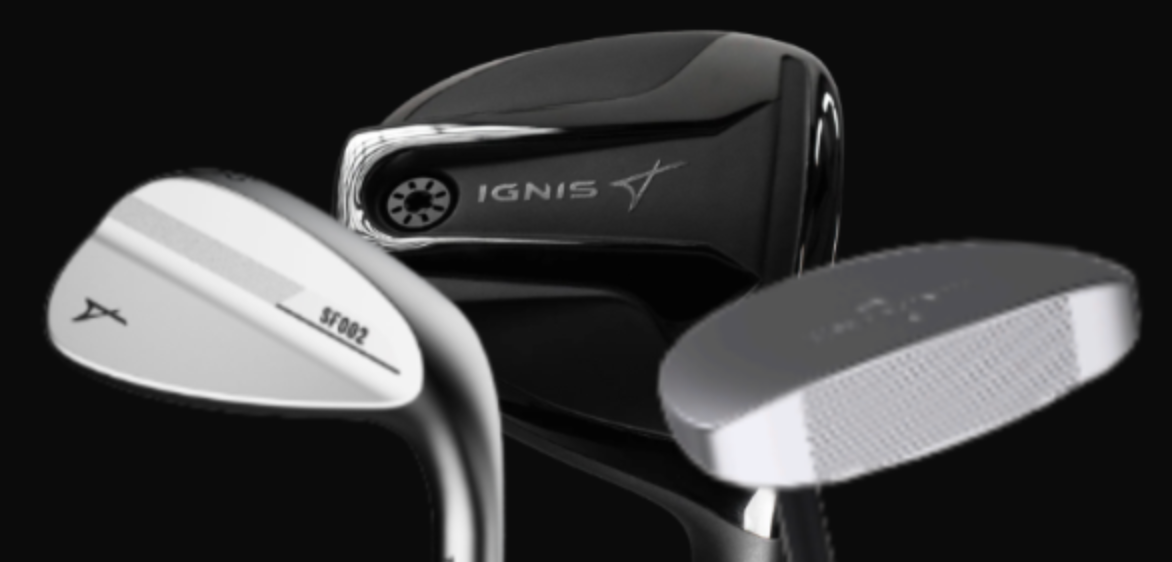
The IGNIS D2 fairway wood covers all three. Its carbon crown pulls weight down low for an easier launch, and the variable-thickness face is there to protect ball speed when contact wanders off the middle. It's also designed for more spin, for control and a predictable flight, rather than a low-spin missile you can't stop.
| Launch lever | What it does | IGNIS D2 |
|---|---|---|
| Loft | More degrees, higher launch | 15°, 18°, 21° |
| CG height | Lower CG, easier launch | Carbon crown |
| Shaft profile | High-launch profile adds height | Fujikura Ventus Red shaft |
| Adapter sleeve | Fine-tunes launch and spin | Adjustable, settings marked with letters |
| Weight screws | Swapped to fine-tune launch and spin | 8 g and 3 g screws |
Loft does most of the work in that table. The rest refines a flight that's already roughly where you want it.
Set Up an IGNIS D2 for the Most Height

If height is the goal, start with the 21° 7 wood. At 41.75 inches it's also the shortest of our three woods, and a shorter club is easier to find the middle of, which protects the loft you deliver.
Next, the shaft. The Fujikura Ventus Red is the high-launch, mid-spin option, in A-flex, Regular or Stiff, with shaft weights of 58 g, 64.5 g and 65 g. The Fujikura Ventus Blue launches mid with lower spin, for players who already hit it plenty high. Stiff is for players whose driver swing speed sits at 95 to 105 mph. Swing slower than stiff and the A-flex or Regular Ventus Red is where to begin.
Then fine-tune. The adapter sleeve has settings marked with letters, and the 7 wood ships with an 8 g screw installed and a 3 g screw in the box. Between them, the sleeve and the weights let you adjust launch, spin and forgiveness to suit your swing. Settle loft and shaft first, because those two do the heavy lifting.
Check Your Launch Before You Change Clubs
Before you buy a high-launch wood, measure the one you have. On a launch monitor, hit five shots with each of your fairway woods off the mat or the turf, never a tee. Write down the average launch angle and peak height, not the best shot. The best one is a souvenir.
What the numbers tell you:
- Every wood launches low. Look at strike first. Where the ball meets the face and how the shaft bends both change the loft you deliver.
- The 3 wood is low and the 7 wood is fine. That's loft doing its job. Lean on the higher-lofted club from the fairway and keep the 3 wood for the tee.
- Your 5 wood and 7 wood finish in the same spot. One of them needs a different job, or a different loft or shaft setup. Our guide to the gap between a 5 and 7 wood walks through how big that gap normally runs.
Trackman also points out that too much dynamic loft sends the ball too high. If your 7 wood balloons into the wind and drops short, the Ventus Blue or a different sleeve setting is the place to look, not less club.
Match the Highest Wood to the Top of Your Irons
Our IGNIS D2 fairway wood has a 15°, 18° and 21° head, so the highest launching option shares a design with the other two and gaps into them in even 3° steps. Run your irons through our fitting tool to get the set below your woods right, and your 7 wood gets one clear job at the top of the bag.
FAQs About High Launch Fairway Woods
Which Fairway Wood Launches the Highest?
The one with the most loft that you strike cleanly. In a standard 3, 5 and 7 wood lineup, that's the 7 wood at about 21°. Weight set low in the head and a high-launch shaft add height on top of the loft.
Do Fairway Woods Launch Higher Than Long Irons?
A 7 wood does, for most golfers. MyGolfSpy says the 7 wood is easier to launch high than long irons, especially at slower swing speeds, while long irons demand precise striking to get up.
Does the Shaft Change How High a Fairway Wood Launches?
Yes. The shaft's bend at impact changes the loft you deliver. On the IGNIS D2, the Fujikura Ventus Red is the high-launch, mid-spin choice and the Fujikura Ventus Blue launches mid with lower spin.
Why Does My 3 Wood Fly So Low Off the Fairway?
It has the least loft of your fairway woods, about 15°, and off the grass it needs a clean strike to get up. Most golfers get more height from a 5 or 7 wood off the grass. Keep the 3 wood for the tee if the low ones keep showing up.


