


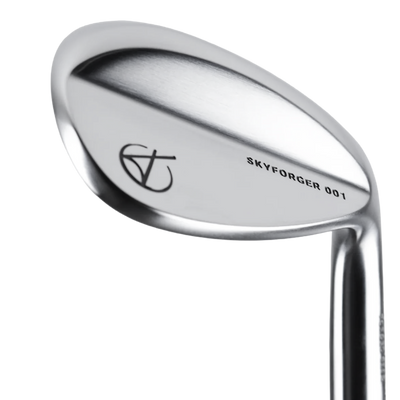


A forgiving iron is built to keep your bad swings playable. When you miss the center of the face, its weight placement holds the ball closer to your line instead of punishing the mistake. That is the whole idea behind forgiving irons, and it is why they also go by the name game-improvement irons.
Takomo Golf builds that forgiveness into clean, high-quality irons you match to your own game, not the ones a pro plays. The term covers a specific set of design features spanning from the maximum-forgiveness hollow-body design of the 101 MKII to the balanced, players-distance stability of the 201 MKII. Each one earns its place for a reason.
What Makes Forgiving Irons Work
An iron is forgiving when its mass sits away from the center of the face, pushed out toward the perimeter, the sole, and the back of the head. That single design choice keeps the face from twisting when you catch the ball off-center. The strike leaves closer to your line, with more of its speed intact.
Contrast that with a blade, where the weight stays packed behind a small sweet spot. Miss the middle by half an inch, and the face rotates, the ball speed drops, and the shot leaks offline. A forgiving design spreads the same weight wider, so the club fights back against your miss instead of punishing it. That approach is not new, and according to the Keiser University College of Golf, cavity-back irons pushed weight to the perimeter for off-center forgiveness as far back as the 1950s.
That is the honest scope of the word. Forgiveness narrows the gap between your worst strike and your best one. It does not close it, and no iron does.
The Design Features That Create Forgiveness
Forgiveness is not one feature. It is a stack of engineering decisions that all point at the same goal, holding the ball on line when you miss the middle, and the best game-improvement irons use every one of them.
- Moment of inertia: MOI measures how much the head resists twisting on an off-center hit. A higher number means a toe or heel strike rotates the face less, so the ball holds its line.
- Perimeter weighting: Moving mass to the edges of the head steadies the face on strikes away from the middle. A heel or toe miss loses far less distance and direction than it would on a blade.
- Low, deep center of gravity: Positioning the weight low and back helps launch the ball higher with less effort. For slower swingers who struggle to get shots airborne, this is the feature that saves the most.
- Wide sole and bounce: A broader sole with more bounce lets the club glide through the turf instead of digging in. That turns a slightly fat strike into a playable shot rather than a chunk.
- Undercut cavity: Hollowing material from the back of the head frees weight to move lower and wider. That is the reason cavity-back irons forgive more than blades.
-
Offset hosel: Setting the leading edge slightly behind the hosel gives the face a touch more time to square at impact, which is what makes the club offset one of the most direct tools against a slice.
Stack these together and the club does quiet work on every swing. A forgiving iron makes your average miss look closer to your best shot, whether you notice the engineering or not.
Match the Fix to Your Miss

The right kind of forgiveness depends on the miss you actually make. A club built to steady toe strikes does little for a golfer who chunks it fat. Line up your pattern against the feature that answers it, keeping in mind that any of these misses can come from more than one cause. What follows are the common culprits, not the only ones.
Toe Strikes
Often comes from a swing arc that passes too far outside the ball, though setup and grip can play a role too. High MOI and perimeter weighting keep the face from twisting when contact drifts toward the toe.
Heel Strikes
Commonly tied to an inside-out path with a late release, but it can show up for other reasons as well. Heel-side weighting helps stabilize the face against this kind of miss.
Thin Shots
Frequently happens when weight hangs back and the wrists roll early, among other possible causes. A low center of gravity helps lift even a poor strike into a usable flight.
Fat Shots
Often the result of a steep attack angle and poor weight shift, though it's not the only path to a fat shot. A wide sole with real bounce lets the club glide through the turf instead of digging into it.
Toe and heel strikes are twisting misses, and MOI plus perimeter weighting keep the face stable through them. Thin shots come off low and weak, so a low center of gravity lifts even a poor strike into a usable flight. Fat shots dig, and a wide sole with real bounce lets the club glide through the turf instead of stopping in it. That one feature saves more strokes per round for high handicappers than almost any other.
When Forgiveness Works Against You
More forgiveness always costs you something. The same perimeter weighting and offset that keep a beginner's shots in play also make the ball harder to work on purpose. Past a certain skill level, that trade stops being worth it.
A 20-plus handicap wants maximum help, since shaping shots isn't realistic yet and offset cuts down the slice that costs the most strokes. The 101 MKII is built for exactly this end of the spectrum. From 10 to 20, a little workability starts to matter, and a mid-cavity or players-distance iron like the 201 MKII gives some of it back. Under 10, heavy forgiveness can cap what a good ball-striker is capable of, and control becomes the priority, which is where a players' iron such as the 301 CB or 301 MB takes over.
One more point gets missed. Forgiveness is not uniform across a set. A 4-iron forgives less than a 9-iron in the same set, simply because longer irons are harder to launch. That's part of why the 101 MKII set starts at the 5-iron instead of the 4-iron in the first place. If you're a high handicapper still carrying a long iron from an older or different set, a hybrid does that job better. The deeper center of gravity and higher launch cover the work your swing isn't doing yet.
How Forgiveness Shifts Across Takomo's Irons

Forgiveness is not a one-time setting. The amount you want changes as your ball-striking improves, so the honest move is to match the model to where your game is now, not where you hope it lands.
The Iron 101 MKII is the true game-improvement iron of the line and the most forgiving. The wide sole, deep cavity, and generous offset from the list above are tuned to their fullest, which keeps a beginner's or higher-handicapper's off-center and fat strikes in play. It's not just our take either: MyGolfSpy named it the Best Game-Improvement Iron of 2026. The trade is a larger head and more offset at address, a look some players move past as they improve.
The Iron 201 MKII keeps real forgiveness but folds it into a cleaner, hollow-body players distance shape. It suits improving golfers who have outgrown a pure game-improvement iron yet still want a wide margin for error, with a bit more speed and a subtler look behind the ball. Golf Monthly called it one of the most complete irons they'd tested at the price, praising the feel and two-tone finish.
Past that point, the line starts trading forgiveness for control, the same shift covered earlier. None of these irons fix a swing. Each one decides how much of your miss the club absorbs, and picking a forgiving iron comes down to how much help your game still needs.
How Forgiveness Helps You Play Better
Perimeter weighting, a low center of gravity, a wider sole, and offset all pull in one direction. They keep more of your swings on the fairway or the green, even the ones you don't catch clean. That is how these irons help you score, not by fixing your swing, but by giving the one you have a wider margin to work inside.
Match that margin to your miss and your skill level, and the right set makes the game easier to play and easier to improve at. If you're not sure which one fits your swing, the fitting tool points you to it in a few honest questions.
FAQs About Forgiving Golf Irons
Is a Forgiving Iron Worth the Money?
For most amateurs, yes. Keeping more shots in play lowers scores round after round, and that steadier ball-striking is where the value sits. A low-single-digit player who shapes shots on command gets less from the trade.
Are Game Improvement Irons Good for Beginners?
Yes. Their wide soles, low center of gravity, high MOI, and offset make mishits playable while a new golfer builds a repeatable swing. Starting with a forgiving design is one of the smartest equipment decisions a beginner can make.
Does a Forgiving Iron Help With a Slice?
It can help. Offset is the most direct feature for it, giving the face more time to square at impact, and high MOI resists the twisting that adds to a slice on heel strikes. Neither replaces a swing fix, but both reduce how far the ball leaks right.
Can a Forgiving Iron Make You Worse?
For a low-handicap ball-striker, yes. The weighting that steadies mishits also resists shot shaping and mutes feedback, which are tools a skilled player uses to score. Below a 10 handicap, control usually matters more than maximum forgiveness.


