


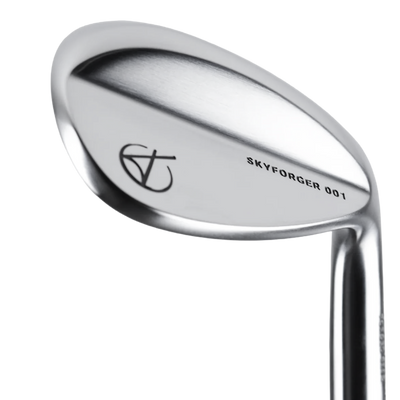


Open any iron spec sheet, and you'll find it: offset. Listed in millimeters. Rarely explained. Every brand assumes you already know what it means, and most golfers nod along without asking.
We're Takomo, and we've spent a lot of time helping golfers cut through specs exactly like this one. So, what is offset in a golf club? It's the distance between the leading edge of the clubface and the front of the hosel. When the face sits behind the shaft at address, that gap is offset. It runs under 1mm in players' irons and climbs to 4mm or more in game-improvement designs.
Stand over an offset iron, and you'll see it. A small step is located where the hosel meets the face. That's not cosmetic. It's a deliberate design decision with a specific mechanical purpose.
What Is Offset in a Golf Club, Mechanically Speaking?
Most recreational golfers struggle with an open clubface at impact. The face doesn't finish rotating to square before it hits the ball. Combined with swing path, that face-to-path relationship is what determines whether the ball spins left to right (a slice) or right to left (a hook).
Offset helps by giving your hands a fraction more time to rotate the face before contact. The shaft arrives first. The face follows. That small delay makes it easier to return the face closer to square, which reduces the open-face-to-path angle that sends the ball curving right.
It also moves the CG lower and further back, which promotes a higher ball flight and pairs naturally with perimeter weighting for more forgiveness on off-center hits. One gap in the hosel addresses two of the most common problems recreational golfers deal with.
The design provides assistance. It doesn't replace the swing.
Offset Irons vs. Blade Irons: What's the Difference?

A bladed iron has minimal to zero offset. The leading edge sits nearly flush with the front of the hosel. The face and shaft arrive at the ball at essentially the same moment.
An offset iron creates that gap intentionally. The face trails the shaft. The timing difference is tiny in absolute terms. The effect on ball flight is not present.
Blades give you complete control over shot shaping. Every degree of face angle at impact is yours to manage. That's valuable if your swing is consistent enough to use it. It's a liability if it isn't.
Offset clubs step in when your face angle is slightly off. They help you make contact that's more square than your swing actually produced. The tradeoff is that they do some of that work for you, which higher-handicap players need, and low-handicap players can't afford.
The difference isn't about price or prestige. It's about skill matching. Offset irons consistently rank among the most forgiving options available for exactly that reason.
Should You Use Offset Golf Clubs?
The honest question isn't whether offset is good or bad. It's about whether your ball flight and skills needs what offset provides.
Who Benefits From Offset Irons
The clearest candidates are high handicappers and beginners: players whose swings are still developing and who consistently leave the face open at impact. The offset hosel works with the timing issues that naturally show up at that stage. It doesn't demand a swing that isn't there yet.
Returning golfers often fall into the same category. Timing takes time to rebuild, and offset buys some of that time at the equipment level.
Mid-handicappers are a more individual call. The question isn't handicapped. It's the ball's flight. If you still carry a slice under pressure or when you're tired, offset is probably helping you more than it's limiting you. If your misses have shifted to the left and you're now deliberately shaping shots, this may be working against you.
Who Should Avoid Offset Irons
Single-digit handicap players who already square the face consistently will find offset introduces bias they didn't ask for. The same assist that helps a slicer can push a neutral swing into an unwanted draw. Golfers who already play a draw or hook will compound that further. At that level, what you need from an iron is feedback and control, not help.
Why Tour Pros Don't Use Offset Irons
Tour players square the clubface reliably. They don't need the assist. More importantly, they can't afford it. Shot shaping at the tour level requires precise face control in both directions. An offset hosel introduces a face-squaring bias that fights intentional fades and reduces available trajectories.
The average male golfer carries a handicap index of 14.2, according to the USGA. That's the actual profile of recreational golf. Offset is calibrated for that golfer, not the top fraction of one percent. The tour pro who bypasses offset and the 18-handicapper who plays it are both using equipment matched to their games.
What to Look for in Offset Irons

Not all offset irons deliver the same result. We look at four specs that separate the designs that work from the ones that just look the part.
-
Degree of offset: More offset means more face-squaring assist and more draw bias. Match the amount to your actual ball flight, not just your handicap.
-
Progressive offset: Better iron sets taper offset from higher to lower across the set. Long irons carry more offset, where timing is hardest. Short irons carry less, where precision takes over. Uniform offset across every club is a compromise.
-
Cavity-back construction: Offset almost always pairs with perimeter weighting. The two features are designed to work together.
-
Shaft fit: The shaft determines how the offset geometry performs for your swing speed and tempo. The shaft guide covers how to match those variables correctly.
These four specs tell you more about an iron than any marketing category ever will.
Offset Is a Fit Decision, Not a Compromise
The gap that defines an offset is small. The difference it makes depends entirely on your swing. If your face is consistently open at impact, offset works with you. If your face is already square, it gets in the way.
Offset clubs belong in the bag of any golfer who slices, struggles to launch the ball, or is still building a consistent swing. They don't belong in the bag of a player who's already solved those problems.
If that sounds like your game, the Iron 101 MKII is built around exactly that profile. The product offers a maximum offset, maximum forgiveness, and is priced at roughly half of what legacy brands charge for the same performance. The Takomo fitting tool takes two minutes, asks the right questions, and gives you a recommendation that actually matches your swing.
FAQs About Offset Golf Clubs
Are Offset Irons Good for Beginners?
Yes. Early-stage swings tend to leave the face open at impact, which causes slices. Offset compensates for that at the equipment level, making the game more playable while a consistent swing is still developing.
Can Offset Golf Clubs Fix a Slice?
No, but no club can. Offset reduces the severity of a slice by giving the face more time to close through impact. The swing path that's causing it still needs work. Think of offset as damage control while you sort out the root cause.
What Is Progressive Offset?
Progressive offset means longer irons have more offset, shorter irons have less. A 4-iron might carry 4mm; a 9-iron carries 2mm. More help where timing is hardest, more precision where it matters most. Sets without progressive offset give every club the same amount, which sounds consistent but actually isn't.


