


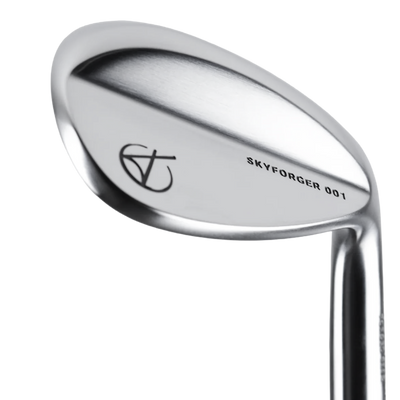


Forged golf irons are clubheads made from a single solid piece of steel, heated and pressed into shape rather than poured into a mold. Takomo's own 301 CB and 301 MB are a real-world example: both are precision-forged from one billet of soft carbon steel, no face inserts, no internal fillers, just a one-piece forging finished by hand.
That's the short answer, and it's also where most articles on this topic stop. What they skip is the part that actually helps you buy the right iron: how forging interacts with modern head shapes, why "forged" and "for pros only" stopped being the same claim years ago, and what you're actually allowed to do to a forged iron after you buy it (bend it, re-grip it, put it in a bag with cast irons). This guide fills in those gaps.
What Are Forged Golf Irons, Really?
A forged iron starts as a single solid bar of steel, called a billet. That billet is heated until it's soft enough to work but still solid, then pressed under enormous force into the rough shape of a clubhead. From there, a person mills, grinds, and polishes it by hand to hit the final specifications. Nothing is poured, nothing is hollow at this stage, and nothing is bolted together. That process squeezes impurities and porosity out of the steel, leaving a denser, more uniform grain structure, which is part of why forged heads are so consistent from one club to the next.
The alternative, casting, pours molten steel into a mold and lets it cool into shape. Casting is faster, and far more flexible for creating complex internal geometry, which is why most game-improvement irons on the market today, including Takomo's own 101 MKII and 201 MKII, are cast rather than forged.
Forged vs. Cast: The Actual Manufacturing Difference
The forged vs. cast irons conversation usually gets reduced to "forged is better, cast is easier," which undersells both processes. Casting isn't a shortcut so much as a different tool for a different job. Because molten steel can fill almost any mold shape, casting lets manufacturers hollow out the back of the head, add internal weighting, and build in features that a solid forged billet simply can't accommodate. Forging trades that design flexibility for material consistency and a more direct, less padded feel at impact.
Neither process makes a bad club. They make different clubs for different priorities. That framing matters more than the manufacturing trivia, because it's the actual decision you're making when you choose a set.
Why Forged Irons Feel Different at Impact
The "soft feel" reputation isn't marketing. Forged heads are typically made from softer carbon steel than the stainless steel used in most cast irons, and the forging process leaves the metal's internal grain structure tighter and more uniform. Less internal variation means vibration travels through the head more predictably, which is what your hands actually register as feel and feedback. A pure strike feels solid and quiet. A strike off the toe or low on the face feels, and sounds, different enough that you know immediately without watching the ball.
That feedback loop is the entire appeal for a certain type of golfer. It's also the entire problem for a golfer who doesn't want that much information after every mediocre swing.
The Forgiveness Trade-Off Nobody Likes Admitting

Here's the part most buying guides gloss over: the same compact shape and lack of internal weight redistribution that give forged irons their feel also make them less forgiving. A traditional forged blade has a small, dense sweet spot and comparatively little help on mishits. That isn't a flaw. It's the trade-off you accept in exchange for feel and control, and it's worth saying plainly instead of hiding it behind vague "for better players" language.
If your misses are still frequent and unpredictable, a forgiving iron with more perimeter weighting and a bigger sweet spot will simply save you more strokes than a forged blade will, no matter how good it feels on the shots you do hit clean.
Cavity Back vs. Muscle Back: Two Shapes, Same Forging Process
Cavity back and muscle back describe the shape of the back of the clubhead, not the manufacturing method, and both shapes can be forged. Takomo's own 301 CB and 301 MB make the point cleanly: same billet, same one-piece forging, same lofts and lies, but the CB redistributes some mass to the perimeter for a bit more forgiveness while the MB keeps it packed behind the sweet spot for maximum workability.
The Hollow Body Question: Can a Forged Iron Be Hollow?
A hollow body iron is built from multiple pieces, typically a face, a body, and internal weighting, assembled around an air pocket. That multi-piece assembly is a casting technique. A single forged billet, by definition, can't be hollow, so a genuinely one-piece forged iron is always solid, even when a hollow design uses a forged face insert for feel. Takomo's 101 MKII is a cast hollow body iron, not forged, which is why it's built for distance and forgiveness rather than the feel a forged head prioritizes. MyGolfSpy named it Best Game-Improvement Iron of 2026.
Who Forged Irons Are Actually For (Honest Handicap Talk)
The honest answer is narrower than most sites will admit: fully forged, muscle back irons are built for elite and scratch-level players who strike the ball consistently enough to accept a small sweet spot in exchange for maximum feel and shot-shaping control. That's not a marketing line, it's a direct consequence of the shape and weighting those clubs carry.
Forged cavity backs widen that audience somewhat, since perimeter weighting adds a real margin for error while keeping the forged feel. But if you're still working on contact consistency, a forgiving iron built around a larger sweet spot will do more for your scores than any amount of feedback. This isn't about being "good enough" to deserve a forged iron. It's about what a given shape is engineered to do. It's also why Takomo builds both ends of that spectrum instead of picking one: the cast, hollow body 101 MKII and 201 MKII for golfers who need forgiveness first, and the forged 301 CB and 301 MB for golfers who've earned the trade-off and want the feel to match.
Can You Bend a Forged Iron? Lie Angle and Loft Adjustability

One real, practical advantage of forging rarely gets a straight answer: bend tolerance. Because forged heads are made from softer, more malleable steel, a qualified clubfitter can typically adjust lie angle by up to two degrees in either direction without weakening the head. Try the same adjustment on a cast head and you risk cracking it, since cast steel is harder and more brittle by nature. If you expect to fine-tune your fit over time, or if your swing changes as you improve, that bend tolerance is a genuine long-term advantage of forged construction, not just a feel story.
Shafts and Forged Irons: Does Steel vs. Graphite Matter?
The forged-versus-cast decision lives entirely in the clubhead. The shaft is a separate choice, and one that too many articles about forged irons ignore entirely. Graphite shafts work fine in forged heads and suit any swing speed. What matters for shaft selection is flex, not material, so don't let a "steel shafts only" assumption steer you away from graphite if that's what fits your swing and your joints.
The Price Myth: Do Forged Irons Have to Cost a Fortune?
Forging is more labor-intensive than casting, which does add real cost to production. But the retail prices attached to forged golf irons from the legacy brands reflect a lot more than manufacturing labor, including marketing spend, retail markup, and pro-tour sponsorship deals that get baked into every box on the shelf. A forged iron built to the same specs and tolerances doesn't need to cost four figures to perform. The construction method explains part of the price. It doesn't explain all of it.
Forged Irons at Takomo: The 301 CB and 301 MB
Takomo's 301 CB and 301 MB are both precision-forged from a single piece of soft carbon steel, no face inserts, no internal fillers, just a one-piece forging finished by hand. They share identical lofts, lies, and offsets, so the choice between them comes down entirely to shape. The 301 CB is a forged cavity back built for skilled players who want that classic forged feel with a bit more margin for error on a mis-hit. The 301 MB is a true muscle back blade, built for elite ballstrikers who want maximum workability and feedback and are willing to accept a smaller sweet spot in exchange. The 301 CB placed 3rd overall in MyGolfSpy's Best Player's Irons testing and separately won their Best Value award that year, worth knowing if third-party validation matters to your decision.
Neither is the right choice if you're still building consistency in your ball-striking. That's not a knock on either club, it's just what forged, compact heads are designed for.
Caring for a Forged Iron

Forged heads don't need special treatment day to day. Soap and water after a round keeps grooves and the face clean without anything harsh. Skip degreasers like WD-40, which aren't ideal for club finishes over time. Beyond that, forged irons hold up the same way any well-made iron does: dry them off, store them somewhere they won't bang against each other, and get lie and loft checked periodically if your swing or your fitting needs change.
Find the Right Iron for Your Game
Forged, cast, cavity back, muscle back: none of it matters as much as whether the iron in your hand matches how you actually strike the ball. If you're a consistent, accomplished ball-striker chasing feel and control, a forged iron like the 301 CB or 301 MB earns its keep. If you're still building that consistency, a forgiving cast iron will save you more strokes than any amount of feedback would. Run your swing through Takomo's Fitting Tool to see which category actually fits.
FAQs about Forged Irons
Are forged irons better than cast irons?
Neither is objectively better. Forged construction typically gives you more feel and feedback with less built-in forgiveness. Cast construction typically gives you more forgiveness and design flexibility with a firmer feel. "Better" depends entirely on your ball-striking consistency and what you value on a mis-hit.
Can beginners play forged golf irons?
Beginners can, but a forged muscle back's small sweet spot will punish inconsistent contact more than a cast, cavity-back iron will. Most beginners get more value, and more improvement, from a forgiving cast iron while their swing develops.
Are all forged irons blades?
No. Forging is a manufacturing method, not a shape. Forged heads can be cavity backs or muscle backs. Cavity back forged irons trade a little feel for a somewhat larger margin of error compared to a true muscle back.
Do forged irons rust?
Carbon steel, the material most forged irons use, is more reactive than the stainless steel common in cast heads, so some surface patina is normal over time on certain finishes. Regular cleaning and drying after rounds minimizes it.
Can a hollow body iron be forged?
Not in the traditional sense. A fully forged iron is a single solid piece of steel, which rules out a hollow internal cavity. Hollow body construction relies on multiple assembled pieces, which is a casting and manufacturing approach, not a forging one, even when a forged face insert is used for feel.


